

Could asbestos exposure from a job or workplace decades ago still matter after a lung cancer diagnosis? It may. Asbestos lung cancer claims can depend on connecting a confirmed diagnosis to past exposure, even when details are difficult to recall or document. A diagnosis alone doesn’t determine whether a claim is available, but an incomplete work history doesn’t automatically rule one out either.
It’s understandable to feel unsure about where to begin. Exposure may have happened long ago, records may be incomplete, and lawsuits, asbestos trust fund claims, and filing deadlines can be confusing. The right path depends on the facts of the individual case. Eligibility and compensation aren’t guaranteed.
This guide explains how asbestos lung cancer claims are generally evaluated, which medical, work, and exposure records may help an attorney assess a case, and what recovery routes could apply. It also explains why deadlines deserve prompt attention and offers practical steps for organizing information, even if you can’t remember every product, worksite, or date. The goal is to help you understand what may support a claim and what questions to ask as you consider your options.
Key Takeaways
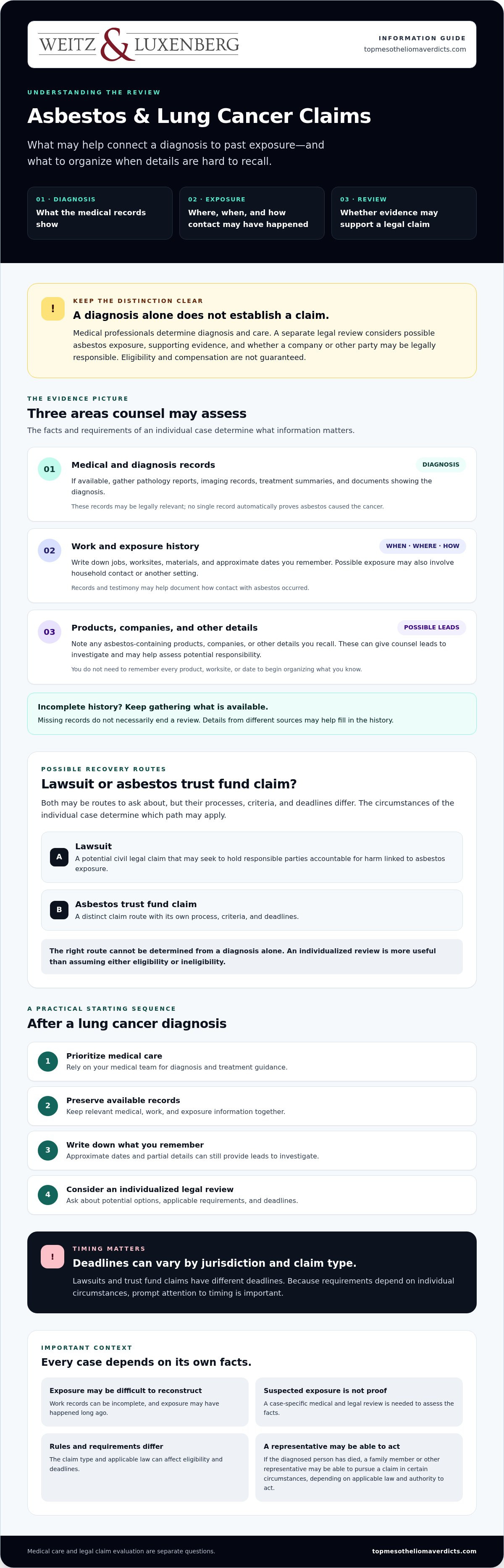
- Asbestos lung cancer claims are evaluated case by case. A diagnosis alone doesn’t establish eligibility or guarantee compensation.
- Medical records, work history, and details about possible asbestos-containing products may help counsel assess exposure and potential responsibility.
- Missing records don’t necessarily end a review. Write down what you remember and gather available documents to help fill in the history.
- Lawsuits and asbestos trust fund claims have different processes, criteria, and deadlines. The appropriate route depends on the circumstances.
- After diagnosis, prioritize medical care, preserve relevant records, and consider discussing possible claim options with experienced counsel.
What Are Asbestos Lung Cancer Claims, and Who May Have Legal Options?
A lung cancer diagnosis can bring urgent questions: Could asbestos exposure from years ago be relevant, and what legal options might exist? An asbestos lung cancer claim is a potential civil legal claim that may seek to hold responsible parties accountable for harm linked to asbestos exposure. It isn’t an automatic entitlement. A diagnosis by itself doesn’t establish that asbestos caused the cancer or that a person qualifies to bring a claim.
Whether legal options exist depends on the evidence and the rules that apply to the individual circumstances. Deadlines and other requirements can vary by jurisdiction and claim type. An individualized review is more useful than assuming either eligibility or ineligibility.
How can asbestos exposure relate to lung cancer?
Asbestos exposure is one factor medical professionals may consider when evaluating a person’s health, and legal counsel may investigate when assessing a claim. These are distinct questions: a medical diagnosis identifies the disease, while a legal review considers whether there’s evidence of exposure and whether a company or other party may be legally responsible. One doesn’t establish the other.
Asbestos has been associated with several diseases, including lung cancer. The overview of Asbestos-related diseases describes conditions linked to exposure, but it can’t determine what caused an individual’s illness. Only the person’s medical team can advise on diagnosis and care. Potential legal responsibility requires a separate review of the facts.
Who may have a potential asbestos lung cancer claim?
A person diagnosed with lung cancer may ask an attorney to assess whether their exposure history and other evidence support a potential claim. Depending on the circumstances, that review may include exposure through employment, household contact, or another setting. Suspected exposure alone doesn’t establish that a claim can proceed.
If the diagnosed person has died, a family member or other representative may be able to pursue a claim in certain circumstances, depending on applicable law, the person’s relationship, and any legal authority to act. Rules differ, so a family shouldn’t rely on general information to determine who can act or whether a deadline applies.
For an initial review, it may help to share what you know about the diagnosis, jobs or settings where exposure might have occurred, and any companies or products you remember. You don’t need to reconstruct the history alone. An attorney can help identify which details may matter and explain whether further investigation or a different legal path may be appropriate.
What Evidence Can Help Connect Lung Cancer to Asbestos Exposure?
For asbestos lung cancer claims, evidence helps counsel assess the diagnosis, possible exposure, and parties that may have responsibility. Exposure evidence includes records and testimony that may help document when, where, and how contact with asbestos occurred. The National Cancer Institute’s Asbestos Exposure and Cancer Risk fact sheet explains health risks associated with exposure. It can’t establish the cause of an individual’s cancer, which requires a case-specific medical and legal review.
Start with what’s readily available. Records from decades ago may be incomplete, and a missing document doesn’t necessarily end an assessment. Details can come from different sources. Which information matters depends on the facts and the requirements of a potential claim.
Which medical and diagnosis records may be useful?
If you have them, gather pathology reports, imaging records, treatment summaries, and documents showing the diagnosis. Medical professionals determine the diagnosis and guide care. Attorneys may review these materials for their legal relevance, but no single record automatically proves that asbestos caused the cancer or establishes a right to compensation.
How can someone document past work and exposure history?
Write down details while they’re available to you, even if dates are approximate. This can give counsel leads to investigate and help connect separate parts of a long work history. Occupational histories can involve different jobsites and materials. This asbestos exposure and worksite overview offers one example of the workplace details people may consider.
A starting checklist may include:
- Medical: Diagnosis records, pathology, imaging, and treatment documents.
- Work history: Employers, job roles, approximate dates, and worksites.
- Exposure details: Materials or products remembered, tasks performed, and how contact may have happened.
- Possible leads: Coworkers, family recollections, union records, and employment documents.
You don’t need to know every product name or recall every date. A coworker’s recollection or an old employment record may help fill in gaps, though its value depends on the circumstances. Preserve originals where possible, and note what you remember without guessing. An attorney can assess whether available information supports further investigation. To learn more about asbestos lung cancer claims representation, visit Weitz & Luxenberg.
Lawsuit or Asbestos Trust Fund Claim: How Do the Options Differ?
Once possible exposure has been identified, the next question may be where a claim could be considered. Lawsuits and asbestos trust fund claims are different routes, each with its own basis and process. The World Health Organization explains that asbestos exposure is linked to asbestos-related diseases, but that health context doesn’t determine which legal route may apply to an individual.
Here’s a general comparison. The right option depends on exposure evidence, potentially responsible entities, and applicable rules.
| Consideration | Lawsuit | Trust fund claim |
|---|---|---|
| Basis | A civil claim seeking accountability from potentially responsible parties. | A claim submitted to a trust connected to a bankrupt asbestos company. |
| Process | May involve investigation, court procedures, and case-specific resolution. | Follows the trust’s own filing criteria, documentation requirements, and review procedures. |
| Case-specific factors | Potential defendants, evidence, venue, and procedural rules vary. | Eligibility depends on the trust’s criteria and evidence linking exposure to the relevant company or product. |
This comparison is a framework, not a determination of eligibility. Not every claimant can pursue every route, and compensation from multiple sources isn’t automatic. A legal review can help identify which possibilities, if any, fit the facts.
What does an asbestos lung cancer lawsuit involve?
A lawsuit is generally a civil claim alleging that one or more parties may be legally responsible for asbestos-related harm. The parties, evidence, venue, and procedural steps depend on the case and applicable law. A mesothelioma litigation guide can explain some shared litigation concepts, but a lung cancer claim has its own medical and evidentiary considerations.
How may asbestos trust fund claims differ?
Asbestos trusts are associated with companies that entered bankruptcy and established trusts to address claims. Each trust sets its own criteria and procedures, so documentation that matters for one may not establish eligibility with another. A guide to asbestos trust fund payout percentages offers additional context, but it can’t predict approval or payment in a particular case.
If you’re weighing options, counsel experienced with asbestos lung cancer claims may review exposure evidence and explain which paths could be relevant. Weitz & Luxenberg represents people in asbestos lung cancer litigation and trust fund claims. Learn more about asbestos claim representation. Any potential eligibility or outcome depends on the individual facts.
What Should You Do After an Asbestos-Related Lung Cancer Diagnosis?
Start with medical care. Follow your healthcare team’s guidance, and don’t change or delay treatment decisions to investigate a legal claim. If you want to understand whether asbestos exposure may be relevant, preserve records you already have and write down what you remember about past work or other possible exposure. You don’t need to reconstruct everything before asking for a legal review.
Time can matter. Limitation periods differ by jurisdiction and may depend on the type of claim and individual facts. “The applicable filing deadline depends on the relevant law and the facts of the case.” An attorney can identify which rules may apply. Seeking a review promptly can help you avoid relying on a general deadline that may not fit your situation.
What information should you prepare for an initial legal review?
A short timeline can help organize the discussion. Include what you know, and mark uncertain dates as estimates rather than guesses. Bring available documents if convenient, but don’t postpone contact while searching for every record. With your permission, a family member can help gather information or take notes.
- Diagnosis timeline: When you were diagnosed and what relevant medical records are available.
- Work and exposure history: Employers, job roles, worksites, approximate dates, and materials or products you recall.
- Other possible exposure: Household or other settings that may be worth discussing.
- Prior legal filings: Any claims or filings you or a representative have already made, if applicable.
These details help counsel decide what further information may be useful. Missing documents don’t automatically determine whether a case can be reviewed.
Why should you ask about deadlines and case costs early?
Ask the attorney to explain which filing deadlines could apply and what facts affect that analysis. Also request a clear explanation of the fee arrangement, including contingency terms, expenses, and who may be responsible for case costs. Weitz & Luxenberg offers free consultations and works on a contingency basis, but confirm the specific terms directly. A consultation doesn’t guarantee eligibility or recovery.
If you’re ready to discuss your circumstances, you can request an initial asbestos claim review. Bring what you have, ask what remains uncertain, and take the next step at a pace that respects your medical needs.
How Can Asbestos Lung Cancer Claim Counsel Help You Evaluate Next Steps?
Once you’ve gathered what you can, counsel may help turn scattered details into a clearer picture. An attorney can review diagnosis records, investigate possible exposure settings, identify companies or other parties that may be responsible, and assess whether litigation, asbestos trust fund claims, or another available path may fit the facts. These steps depend on the evidence and applicable rules. No particular route or result is assured.
Weitz & Luxenberg represents people with asbestos-related lung cancer and handles both asbestos lung cancer litigation and trust fund claims. The firm offers free consultations and contingency-based representation. Ask directly about current fee terms, case expenses, and any conditions that may apply before deciding whether to proceed.
What questions should you ask an asbestos claims lawyer?
A useful review should leave you with a clearer understanding of what is known, what needs investigation, and what may happen next. Consider asking how the firm will assess your diagnosis, exposure history, and supporting records, and which lawsuit or trust claim routes could apply to your circumstances. Ask why a route may be relevant, or why it may not be.
- Who will handle the matter, and how will the firm communicate updates?
- What additional records or information could help assess the claim?
- How do contingency terms work, and who may be responsible for case expenses?
- What filing deadlines should be reviewed based on the facts and applicable law?
Clear answers can help you make an informed decision without feeling pressured to commit before you understand the proposed approach.
What happens when you request a case review?
An initial discussion can help identify the information needed for a more specific assessment. You may be asked about the diagnosis, possible exposure history, and documents you already have. You can also ask what remains uncertain and what steps might follow. You don’t need every answer in hand to begin a conversation.
A consultation is an opportunity to ask questions, not a finding that you qualify for a claim. It doesn’t guarantee compensation or any particular outcome. Confirm the consultation and fee terms directly with the firm, including how expenses are handled.
If you’d like to discuss your circumstances and ask questions, Request a free asbestos lung cancer claim consultation. You can decide what to do after learning more about possible next steps.
Take the Next Step With Clear Information
Understanding asbestos lung cancer claims starts with separating a diagnosis from the evidence needed to assess exposure, responsibility, and possible legal options. Medical records and a careful account of work or other exposure history may help, even when details are incomplete. Lawsuits and trust fund claims follow different processes, and deadlines depend on applicable law and individual facts.
Weitz & Luxenberg represents people with asbestos-related lung cancer and mesothelioma nationwide. The firm offers free consultations and contingency-based representation. Confirm current fee terms and how case expenses are handled directly with the firm. A case review can help you understand what information may be needed and which options, if any, could apply, without guaranteeing eligibility or compensation.
If you’re ready to ask questions about your circumstances, request a free asbestos lung cancer claim consultation. You can take this one step at a time, with a clearer understanding of what comes next.
Frequently Asked Questions
Can I file an asbestos lung cancer claim if I was exposed decades ago?
Possibly. The time between asbestos exposure and a lung cancer diagnosis doesn’t, by itself, determine whether a claim can be brought. Filing deadlines and rules for when those deadlines begin vary by jurisdiction and individual facts. An attorney can review the diagnosis date, exposure history, and applicable law. Don’t assume a deadline has passed, or that it hasn’t, without case-specific guidance.
What evidence do I need for an asbestos lung cancer claim?
Useful information may include diagnosis and treatment records, employment history, job duties, worksites, approximate dates, and details about materials or products you encountered. Coworker or family recollections may point to additional leads. The evidence needed depends on the case, and a missing record doesn’t automatically resolve the question. A legal review can help identify what information may be available and relevant to assessing your asbestos lung cancer claim.
Can family members file an asbestos lung cancer claim for someone who has died?
In some circumstances, an eligible family member or estate representative may be able to pursue a claim, but the rules and available claims depend on jurisdiction and the specific facts. The person’s diagnosis, exposure history, and any existing legal action may matter. Because deadlines may apply, families should seek prompt, case-specific legal guidance rather than assume they qualify or that no options remain.
How long does an asbestos lung cancer claim take?
There’s no single timeline for every claim. The process may depend on the available evidence, parties involved, applicable court procedures, and whether the matter proceeds through litigation or an asbestos trust. After reviewing the circumstances, a lawyer may be able to explain likely steps, but shouldn’t promise a specific resolution date. Ask how the firm will keep you informed as the matter progresses and what factors could affect timing.
Are asbestos lung cancer lawsuits and trust fund claims the same?
No. A lawsuit is a civil case involving potentially responsible parties, while an asbestos trust fund claim is submitted under a particular trust’s criteria and procedures. Which options may be available depends on exposure evidence, the companies involved, and applicable rules. A qualified legal review can explain possible routes based on the facts, without assuming that every person qualifies for either option or can pursue both.
Do I have to pay a lawyer upfront for an asbestos lung cancer claim?
Fee arrangements vary, so ask a lawyer to explain the agreement before deciding. Weitz & Luxenberg offers free consultations and contingency-based representation. Confirm the current terms directly with the firm. Ask how case expenses are handled, what happens if there’s no recovery, and what obligations the agreement creates. Review the written agreement carefully, since a general description isn’t a substitute for understanding its specific terms.
Can I make an asbestos lung cancer claim without a complete work history?
An incomplete work history doesn’t automatically determine whether a claim can be reviewed. People may not remember every employer, date, or material after many years. Other records, witnesses, and details about job duties may help identify possible exposure leads. Share what you do remember with counsel, including approximate dates and worksites, and ask what additional information may help assess the circumstances. Don’t guess when you’re unsure.


