

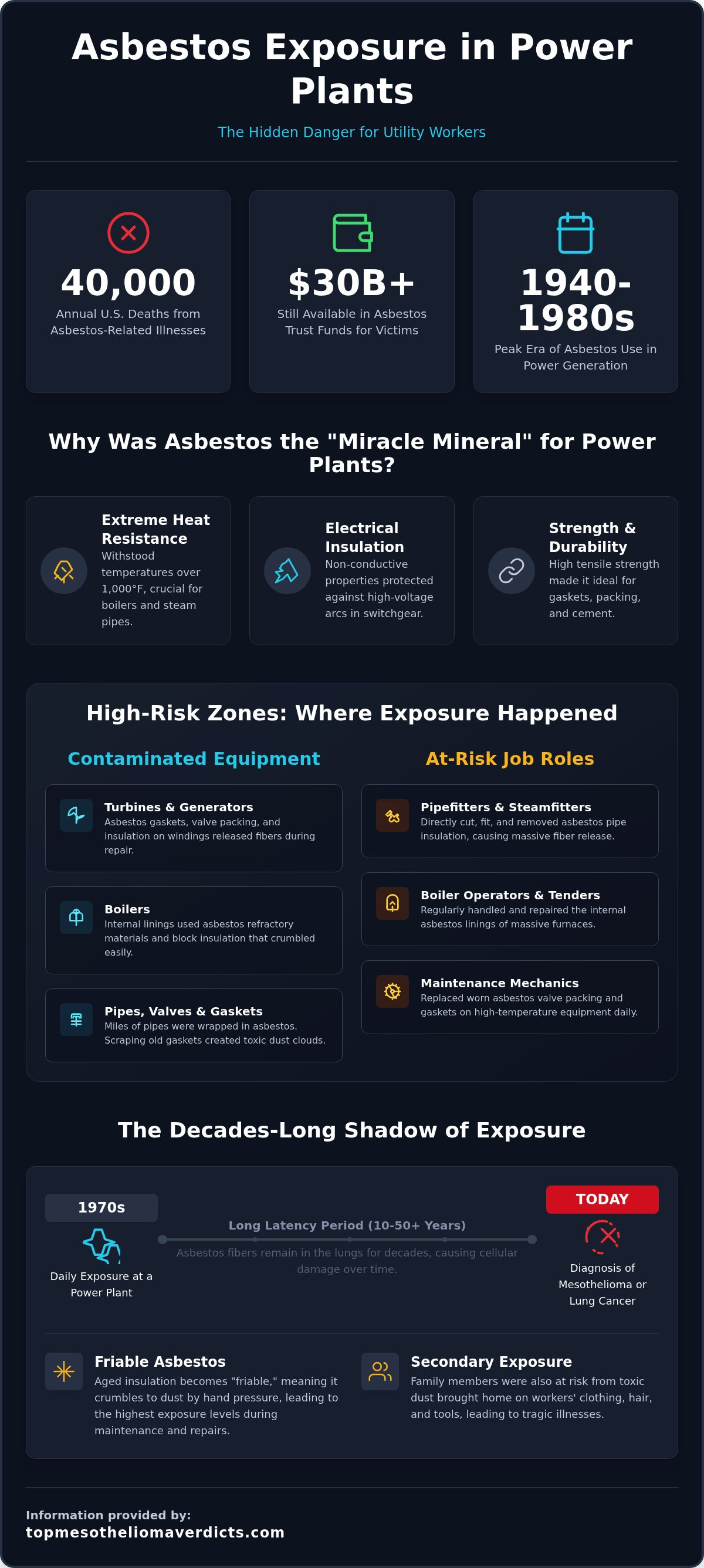
Did you know that nearly 40,000 Americans lose their lives to asbestos-related illnesses every year, often due to work they performed decades ago? For those who spent their careers in utility facilities, the risk of asbestos exposure in power plants was uniquely high because the extreme heat of the environment made toxic insulation almost unavoidable. If you're currently facing a diagnosis of mesothelioma or lung cancer, the confusion and anxiety you're feeling are completely understandable. You dedicated your life to keeping the lights on for others. It's simply wrong that your health was the price of that service.
We're here to act as your advocate and guide during this difficult time. This article explains exactly how exposure happened through specific machinery and equipment. You'll learn about your legal rights and the clear pathways to financial compensation, including how to access the $30 billion still available in asbestos trust funds. We'll walk through the types of equipment that posed the greatest risks and how you can protect your family's financial future without added stress. Our goal is to provide the clarity you need to move forward with confidence and peace of mind.
Key Takeaways
- Identify the specific high-heat machinery and maintenance routines that historically led to asbestos exposure in power plants.
- Understand why a medical diagnosis in 2026 often traces back to utility work performed between the 1940s and late 1980s.
- Explore the differences between traditional litigation and asbestos trust fund claims to determine the most efficient path for your recovery.
- Learn about the risks of secondary exposure for family members who may have encountered toxic dust brought home on work clothing.
- Discover how leveraging a national database of asbestos-containing equipment can simplify the process of documenting your work history.
The History of Asbestos Use in the Power Generation Industry
Power generation requires massive amounts of heat and energy to function. These facilities were designed to operate at temperatures often exceeding 1,000 degrees Fahrenheit, creating environments where fire and thermal management were the highest priorities. To contain this heat and prevent catastrophic equipment failure, engineers relied heavily on asbestos. Known as the "miracle mineral" for its high tensile strength and near-total resistance to fire, it became a standard component in almost every piece of high-heat machinery. The History of Asbestos Use in these settings shows that utility companies prioritized physical safety and efficiency over the long-term health of their workforce.
Between the 1940s and the late 1980s, asbestos exposure in power plants was an everyday reality for thousands of workers. National manufacturers like Johns-Manville, Garlock, and Babcock & Wilcox supplied vast quantities of asbestos-containing materials to the industry. We understand the weight of this history because we've spent 40 years fighting for those it harmed. During this era, the toxic mineral was ubiquitous, found in everything from the gaskets sealing high-pressure valves to the cement used on boiler walls.
Thermal Insulation and Fireproofing Requirements
Boilers, turbines, and miles of steam pipes were wrapped in asbestos block and pipe covering to maintain thermal efficiency. Workers often used thick asbestos blankets to shield themselves from extreme radiant heat while performing repairs in cramped steam tunnels. Over time, these materials became brittle and dangerous. The constant vibration of heavy machinery accelerated the breakdown of these products, releasing invisible fibers into the air. When maintenance crews stripped old insulation to reach a leak, they often worked in a "snowstorm" of toxic dust without any respiratory protection.
Electrical Conductivity and Arc Protection
Beyond heat management, asbestos was essential for electrical safety because it does not conduct electricity. It was woven into electrical cloth and used to manufacture arc chutes, which quenched high-voltage sparks in circuit breakers and switchgear. Electricians and maintenance crews faced specific risks when they handled these components during routine inspections or upgrades. Asbestos is considered friable when it can be crumbled, pulverized, or reduced to powder by hand pressure, a condition that occurs frequently as power plant insulation ages and degrades. This friability meant that even minor contact could saturate a worker's breathing zone with microscopic fibers that remain in the lungs for decades.
High-Risk Power Plant Equipment and At-Risk Job Roles
Identifying the specific source of your illness is the first step toward justice. For decades, asbestos exposure in power plants wasn't a rare occurrence; it was a daily hazard built into the very design of the facility. Every piece of equipment that generated or channeled high-pressure steam likely contained this toxic material. If you worked in these environments, your history with specific machinery is the key to identifying which manufacturers are responsible for your current health struggles. Our extensive database of power plant equipment helps us connect your diagnosis to the specific products you encountered years ago.
Turbines, Boilers, and Generators
The heart of any power plant, the turbine, relied on asbestos gaskets and valve packing to prevent steam leaks under immense pressure. When these gaskets failed or required replacement, workers had to scrape away the old, brittle material. This process sent clouds of dust into the breathing zone. Boilers were equally dangerous. Their internal linings consisted of asbestos refractory materials and block insulation that frequently crumbled during cleaning or repair. Even the electrical generators weren't safe. Asbestos was often used in the insulation of windings and within cooling systems to prevent overheating and electrical fires.
Vulnerable Job Classifications
While everyone in a facility faced some risk, certain roles were on the front lines of exposure. Boiler operators and tenders regularly handled the internal linings of massive furnaces, often in poorly ventilated spaces. Pipefitters and steamfitters were also at extreme risk. Their work involved cutting, fitting, and removing pipe insulation, a process that released millions of microscopic fibers. Maintenance mechanics faced similar dangers every time they replaced worn valve packing or gaskets on high-temperature lines. These workers didn't just touch asbestos; they lived in it for eight to twelve hours a day.
It's a common misconception that you had to work directly with the material to be harmed. Many utility workers suffered through "bystander exposure" simply by breathing the air in a room where others were disturbing insulation. Because of The Long Latency Period and Secondary Exposure Risks, you might not have felt any symptoms until decades after you left the job site. The high-risk nature of asbestos exposure in power plants means that anyone on the floor was potentially in danger. If you're struggling with a diagnosis now, it's helpful to review previous success stories from others who worked in similar environments.
The Long Latency Period and Secondary Exposure Risks
The biological reality of asbestos exposure in power plants is often compared to a ticking clock. Because of the long latency period associated with these diseases, the fibers inhaled during a shift in 1975 might not cause noticeable health changes until 2026. This delay frequently leads to confusion for patients who haven't stepped foot in a utility facility for thirty years. It's vital to understand that your current diagnosis isn't a reflection of your recent lifestyle. It's the result of corporate decisions made half a century ago when companies prioritized profits over the safety of their workforce.
Why Mesothelioma Symptoms Take Decades to Appear
When you inhale microscopic asbestos fibers, they don't simply pass through your system. Their needle-like shape allows them to hook into the mesothelium, which is the protective lining around your lungs, heart, or abdomen. Once they're lodged, your body can't break them down. Over 20 to 50 years, these fibers cause chronic inflammation and scarring. This persistent irritation eventually triggers cellular mutations that lead to malignant mesothelioma or lung cancer. Because the progression is so slow, many veterans of the power industry don't realize they're sick until the disease is advanced. We recommend that any former utility worker seek specialized screenings; identifying these changes early can significantly expand your treatment options.
Secondary Exposure: The Danger to Spouses and Children
Many families are surprised to learn that you didn't have to work inside a plant to develop an asbestos-related illness. Secondary exposure, often called "take-home" exposure, occurred when workers unknowingly carried toxic dust home on their hair, skin, and work coveralls. While the History of Asbestos Use in Power Plants shows how workers were endangered, their families were often the silent victims. Spouses who shook out dusty laundry or children who hugged their parents after a long shift were frequently exposed to the same lethal fibers.
The legacy of asbestos exposure in power plants extends far beyond the facility gates. These family members have the same legal rights to compensation as the workers themselves. If a loved one has been diagnosed with mesothelioma despite never working in a high-risk trade, their illness may be traced back to the dust you brought home from the plant. Protecting your family financially is our priority. We have the experience to help you secure the payouts your spouse or children deserve during this difficult time.
Navigating an Asbestos Exposure Lawsuit and Trust Fund Claims
Seeking financial recovery after a diagnosis can feel overwhelming, but it's a critical step in protecting your family's future. When addressing the consequences of asbestos exposure in power plants, you generally have two primary legal paths: filing a claim against an asbestos trust fund or pursuing a personal injury lawsuit. Each path serves a different purpose, and in many cases, we can pursue both simultaneously to maximize your total compensation. Because every state has a strict statute of limitations, often ranging from one to three years from the date of your diagnosis, it's vital to act quickly to preserve your rights.
To build a successful case, you must provide clear evidence of your work history and the specific equipment you handled. This often includes union records, Social Security earnings statements, and testimony from former co-workers who can verify the conditions at a particular utility site. We use our massive database of asbestos-containing equipment used in power plants to bridge the gap between your work history and the manufacturers who are legally responsible for your illness.
Accessing Asbestos Trust Funds
Many of the largest manufacturers of boilers, turbines, and pumps filed for bankruptcy decades ago. As part of their reorganization, they were legally required to establish trust funds to compensate victims. Today, an estimated $30 billion remains in more than 60 active trusts. These funds offer an expedited review process specifically for power plant veterans, allowing for faster payouts without the need to ever step foot in a courtroom. Because these trusts have established criteria for different job roles, we can often secure these funds relatively quickly once your exposure is documented.
Filing a Mesothelioma Lawsuit
If the companies responsible for your exposure are still solvent and in business, a personal injury lawsuit allows you to hold them directly accountable. This path often leads to significant settlements or trial verdicts that cover medical bills, lost wages, and your family's pain and suffering. When evaluating these cases, it's helpful to understand the asbestos trust fund payout percentages and how they compare to potential lawsuit outcomes. While a lawsuit is a more involved process, it provides a powerful way to demand justice from corporations that knew their products were dangerous but failed to warn you.
The legal process doesn't have to be a source of additional stress for your family. We handle the heavy lifting of investigation and filing so you can focus on your health and your loved ones. If you're ready to explore your options, you can request a free case evaluation to see which pathways are available to you.
How Weitz & Luxenberg Protects Power Plant Veterans
Choosing the right legal partner is the most important decision you'll make after a diagnosis. Weitz & Luxenberg has spent 40 years acting as a formidable ally for those harmed by corporate negligence. As the #1 filer of asbestos cases in 2026, we possess the resources and the experience to take on the world's largest equipment manufacturers. We've recovered over $13 billion for our clients, but our focus remains on the individual families we serve. Our national reach means we can handle your case regardless of where your exposure occurred, ensuring you have access to top-tier representation in all 50 states.
We operate on a contingency fee model, which means you don't pay any upfront costs. You only pay if we win your case. This approach ensures that your pursuit of justice is entirely no-cost and no-stress, allowing you to focus on what matters most: your health and your family. We've seen firsthand how asbestos exposure in power plants devastates lives, and we're committed to holding the responsible parties accountable for the harm they caused.
A Massive Database of Power Plant Exposure Sites
Proving exposure from decades ago is a complex task that requires specific historical knowledge. Our firm maintains a massive database of asbestos-containing equipment used in power plants across the country. We can often identify the exact boilers, turbines, and pumps used at your specific job site, even if that facility has long since closed. Our team of over 500 professionals works tirelessly to investigate every detail of your work history to maximize your recovery. If you're ready to learn more, we invite you to contact us for a free, no-obligation case evaluation.
Maximizing Financial Recovery for Your Family
Our track record of success includes record-breaking results, such as a $117 million verdict achieved in 2025. These outcomes reflect our commitment to securing the highest possible compensation for the families we represent. We handle every aspect of the mesothelioma litigation process, from filing the initial claim to negotiating settlements or taking your case to trial. By managing the legal burden, we ensure you have the financial resources needed for medical care while protecting your family's future. You've spent your career providing for others; now, let us provide the protection and advocacy you deserve.
Secure the Justice and Compensation You Deserve
You've dedicated your career to the essential work of power generation, but you shouldn't have to carry the burden of corporate negligence alone. Understanding the history of asbestos exposure in power plants is the first step toward reclaiming your future. Whether your illness stems from maintaining high-pressure turbines or secondary contact at home, the law provides clear pathways for financial recovery through trust funds and litigation. These resources exist specifically to support families like yours during these challenging times.
Weitz & Luxenberg stands ready to serve as your powerful ally. With 40 years of specialized experience and over $13 billion recovered for victims, we have the resources to handle the most complex cases. As the #1 filer of asbestos injury cases in 2026, we're committed to providing a no-stress experience that prioritizes your health and your family's security. Don't let the statute of limitations expire on your rights. You've worked hard to provide for your loved ones; now, let us work hard for you.
Get a Free Case Review with Weitz & Luxenberg today to begin the process of holding manufacturers accountable and securing your family's financial peace of mind.
Frequently Asked Questions
Can I file an asbestos exposure lawsuit if the power plant I worked at is closed?
Yes, you can still seek compensation even if your former job site is no longer in operation. Most legal claims target the manufacturers of the asbestos-containing equipment rather than the utility company itself. Because we maintain an extensive database of historical equipment used in power plants, we can identify the specific products that caused your exposure. This allows us to hold the negligent manufacturers accountable for their products regardless of the plant's current status.
How much is a mesothelioma settlement worth for a former power plant worker?
Compensation amounts vary significantly based on your specific work history, medical expenses, and the number of companies responsible. While every case is unique, our firm has secured over $13 billion in total verdicts and settlements for our clients. This includes a record-breaking $117 million verdict achieved in 2025. We focus on maximizing your recovery through both trust fund claims and litigation to ensure your family's financial security is fully protected.
What are the symptoms of asbestos exposure in utility workers?
Symptoms typically include persistent shortness of breath, a dry cough that doesn't go away, and localized chest or abdominal pain. Many utility workers also report extreme fatigue and unexplained weight loss. These signs often don't appear until 20 to 50 years after the initial asbestos exposure in power plants occurred. Because these symptoms can mimic less serious respiratory conditions, it's vital to tell your doctor about your history in the power industry.
Is there a time limit to file an asbestos claim after a diagnosis?
Yes, every state has a strict time limit known as the statute of limitations. This window usually begins on the date of your official diagnosis and typically lasts between one and three years. Because these deadlines are firm, it's crucial to contact a legal professional as soon as possible. We handle cases across all 50 states and can help you understand the specific filing requirements for your situation to ensure your rights are protected.
Can my family file a claim if I was exposed to asbestos on my father’s work clothes?
Yes, family members who develop mesothelioma through "take-home" exposure have the same legal rights as the workers themselves. If you were exposed to toxic dust while laundering your father's work clothes or through close physical contact, you may be eligible for compensation. We've spent 40 years representing spouses and children who were unknowingly endangered. These secondary exposure claims are a vital part of holding negligent manufacturers accountable for the broad harm they caused.
Do I have to go to court to receive money from an asbestos trust fund?
No, you don't have to go to court to receive a payout from an asbestos trust fund. These claims are handled through an administrative process designed to provide faster financial relief to victims. There is currently an estimated $30 billion available in more than 60 active trusts. We handle the complex paperwork and documentation requirements for you, allowing your family to access these funds without the stress or time commitment of a traditional trial.
What specific equipment in power plants contained asbestos?
Asbestos was used in a wide range of high-heat equipment including boilers, steam turbines, and electrical generators. It was also common in gaskets, valve packing, pipe insulation, and arc chutes within circuit breakers. Routine maintenance on this machinery often released toxic dust into the air, leading to asbestos exposure in power plants. Our team uses historical records to identify exactly which of these components were present at your specific job site during your years of service.
How do I prove I was exposed to asbestos decades ago?
We prove exposure by gathering work records, union documents, Social Security earnings statements, and testimony from former co-workers. Our firm's 40 years of experience allows us to supplement your personal history with our proprietary database of power plant equipment and manufacturing records. This combination of evidence creates a clear link between your diagnosis and the specific toxic products you handled decades ago, even if you don't remember the brand names of every part.
Published by Weitz & Luxenberg, P.C. National Headquarters: 700 Broadway, New York, NY 10003. Call 800-885-MESO. Attorney Advertising. Prior results do not guarantee a future outcome. Certain contentions in blog posts need to be confirmed by a licensed attorney.


