

Could jobs you held decades ago, products you worked with, or places you visited help support asbestos trust fund claims today? A diagnosis alone may not show whether you meet a particular trust’s requirements. Connecting past exposure to a company often takes a careful review of your medical and work history.
Asbestos bankruptcy trusts were established to address asbestos-related liabilities after certain companies reorganized through bankruptcy. Each trust has its own eligibility criteria and claim process. A trust claim is separate from a lawsuit, and filing deadlines may differ. Understanding those distinctions can help you identify what to review and avoid assuming that one claim automatically qualifies you for another.
This guide explains how asbestos trust fund claims work in 2026, what medical records and exposure details may help document eligibility, and why work history, product information, and job-site records matter. It also explains what to expect as a claim is prepared and reviewed, including how trust claims may relate to asbestos litigation. A clear timeline and organized records can make it easier to assess your options with legal guidance.
Key Takeaways
- Learn why asbestos bankruptcy trusts were established and how their review process differs from a court case.
- See how a diagnosis, exposure history, and links to products or companies may factor into a trust-specific eligibility review.
- Identify records that can help organize your work, product, and medical history before a claim is prepared.
- Understand why trust procedures and legal deadlines vary, and why timing matters when considering asbestos trust fund claims.
- Explore how legal guidance can help assess potential trusts and coordinate claims with asbestos litigation where appropriate.
What Are Asbestos Trust Fund Claims, and Why Do They Exist?
An asbestos trust, a trust claim, and a court case are related concepts, but they are not the same thing. An asbestos trust fund is a source of compensation established as part of certain companies’ bankruptcy reorganizations to address asbestos-related liabilities.
An asbestos trust fund claim is a request for review under a trust’s rules, based on a person’s illness and alleged exposure to asbestos linked to the company that established the trust. Filing a claim does not guarantee approval or payment.
How asbestos bankruptcy trusts were established
Some companies facing substantial asbestos-related claims sought bankruptcy protection and reorganized their obligations. In certain cases, a trust was created through the bankruptcy process to handle claims from people already affected and, as applicable, future claimants. The structure and requirements depend on the company and the specific trust. For a neutral overview of their history and purpose, see Asbestos bankruptcy trusts.
A trust claim is reviewed under the trust’s procedures, rather than presented to a jury. A lawsuit, by contrast, is a court case against a legally responsible party and follows applicable court rules. The same exposure history may be relevant to both processes, but the outcome of one does not automatically resolve the other.
What a trust claim can, and cannot, tell you
Each trust applies its own Trust Distribution Procedures, often called TDPs. These procedures explain the evidence a trust may require and how it evaluates claims. A diagnosis or work history may be relevant, but neither alone establishes that a person meets a particular trust’s criteria.
Likewise, pursuing one trust claim does not establish eligibility for another trust or for a lawsuit. Different companies, products, and exposure circumstances may involve different evidence and legal standards. Each potential claim needs its own assessment, including consideration of how trust claims may interact with litigation.
Payment percentages are one part of how some trusts calculate payments, but they do not determine whether a person qualifies and can change. For more detail, read this asbestos trust fund payout percentages guide. A trust claim is a request for an individual review, not a promise of compensation or a finding about any separate legal claim.
Who May Qualify: Connecting Diagnosis, Exposure, and Trust Criteria
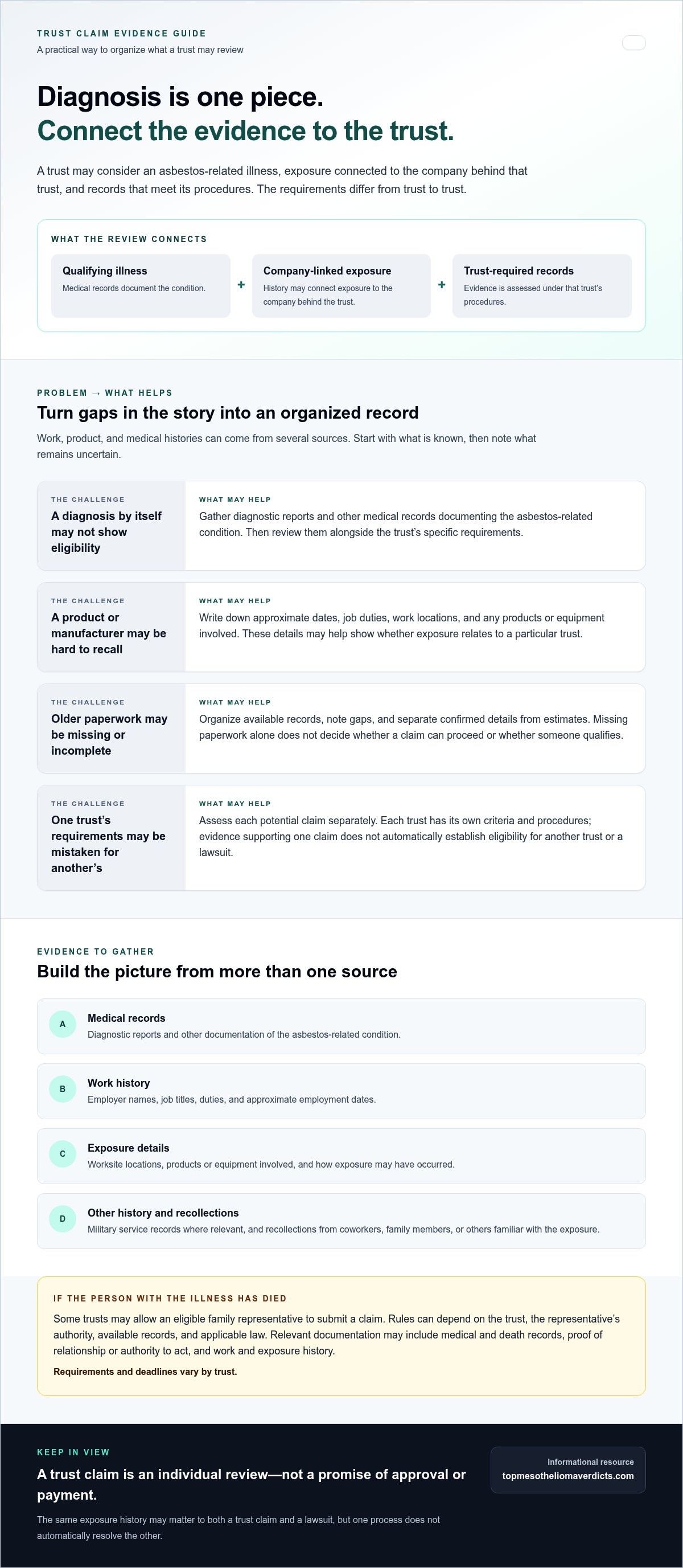
Eligibility is not determined by diagnosis alone. A trust may review whether a person has a qualifying asbestos-related illness, evidence of exposure connected to the company behind that trust, and records that meet its procedures. Each trust makes its eligibility decision under its own rules, so evidence supporting one claim does not automatically establish eligibility for another.
Connecting exposure to a company can take time. Someone may remember working around insulation, building materials, or equipment without knowing who made them. Approximate dates, job duties, work locations, and product details can help show whether an exposure history may relate to a particular trust. The GAO report on asbestos trusts offers background on trust administration and how claim information is handled.
Which records may help document an asbestos claim?
Useful evidence often comes from several sources, rather than a single document. Depending on the trust’s requirements, relevant materials may include:
- Medical records: Diagnostic reports and other records documenting the asbestos-related condition.
- Work history: Employer names, job titles, duties, and approximate dates of employment.
- Exposure details: Worksite locations, products or equipment involved, and how exposure may have occurred.
- Other history: Military service records, where relevant, and recollections from coworkers, family members, or others familiar with the exposure.
Older records may be incomplete, and product names can be difficult to recall. Missing paperwork does not, by itself, decide whether a claim can proceed or whether a person qualifies. Start by organizing what you have, noting gaps, and distinguishing confirmed details from estimates. A review can then identify what additional evidence a particular trust may require.
Can family members file an asbestos trust claim?
Some trusts may allow an eligible family representative to submit a claim after the person with the illness has died. The rules can depend on the trust, the representative’s authority, the records available, and applicable law. Documentation might include medical and death records, proof of the relationship or authority to act, and evidence of the person’s work and exposure history. Requirements and deadlines vary, so family members should review the rules for each relevant trust.
Sorting through these details can feel daunting, especially while managing a serious diagnosis or loss. Legal guidance can help organize an exposure history and compare available records with trust-specific requirements. Learn more about asbestos trust fund claim support.
Trust Fund Claims vs. Lawsuits: Understand the Different Routes
A trust claim and a lawsuit can involve the same illness and exposure history, but they are not interchangeable. Start by identifying which companies may be connected to the exposure, what evidence supports that connection, and which procedures and laws apply. Depending on the facts, asbestos trust fund claims and litigation may both warrant review. Neither route automatically establishes a right to pursue the other.
How trust review differs from a court case
A trust or its claims administrator reviews submitted materials under that trust’s procedures. Litigation proceeds through a court and involves case-specific legal requirements, evidence, and decisions. The U.S. Government Accountability Office report provides background on how asbestos trusts administer claims. For a broader look at court cases and family considerations, see this mesothelioma litigation guide for families.
| Consideration | Trust claim | Lawsuit |
|---|---|---|
| Who reviews it? | The relevant trust or its claims administrator. | The court oversees the case; a judge or jury may decide disputed issues, depending on how the case proceeds. |
| What rules apply? | The trust’s procedures and criteria. | Applicable law and court rules, which can depend on the circumstances and jurisdiction. |
| What evidence matters? | Materials required by the trust, often related to diagnosis and exposure connected to the company behind it. | Evidence supporting the claims against the defendant, including relevant illness, exposure, and responsibility evidence. |
| How long may it take? | Timing depends on the trust’s process and the claim submitted. | Timing depends on case-specific factors, court procedures, and whether issues are resolved before trial. |
When more than one compensation route may be considered
Different parts of a person’s work history may point to different companies. For example, exposure at one job could involve a product associated with a bankrupt company, while other alleged exposure may involve a separate business. That history may raise distinct questions for a trust and for litigation. Each potential claim needs its own review.
Accuracy matters across processes. Trust forms and litigation may require information about exposure, other claims, or payments, and applicable disclosure rules can vary. In some circumstances, trust claims or payments may affect how a lawsuit is handled. Keep the information submitted consistent and complete, and assess coordination requirements under the relevant procedures and law.
A general guide cannot determine which routes fit your circumstances or predict the result. Reviewing your exposure history, potentially responsible entities, and applicable requirements can help clarify the options without assuming one route is faster or more favorable.
How to Prepare an Asbestos Trust Fund Claim: Evidence, Review, and Deadlines
Prepare a claim by starting with the medical diagnosis and exposure history, then identifying which trusts may be relevant and what each requires. The same records may support more than one review, but each submission should address that trust’s criteria and any applicable disclosure requirements accurately.
A practical sequence for organizing claim materials
A written timeline can make a complicated history easier to review. Note diagnoses, jobs, worksites, products or equipment, and approximate periods of possible exposure. Mark which details are documented and which are estimates. Then gather available medical records, employment documents, and information from coworkers or family members who may recall relevant details.
For each potentially relevant trust, compare the available evidence with its procedures. A claim package may call for medical and employment records, exposure details, and, when someone is acting for another person, documentation of their authority. Keep copies and use consistent information across submissions. If a date, employer, or product description differs between records, explain the discrepancy rather than guessing or leaving it unaddressed. Missing documents do not automatically decide eligibility, but they may affect what additional information the trust needs.
Review deadlines and evidence requirements for each trust and each potential legal claim, because the rules and timing can differ. Trust filing deadlines are distinct from state limitation periods for lawsuits, and one does not necessarily extend the other. Trust procedures and deadlines can change, so review current requirements early. If you are considering multiple claims, account for disclosure and coordination requirements to keep the information provided accurate.
What happens after a claim is submitted?
After submission, the trust reviews the claim under its procedures. It may assess whether the records meet its medical and exposure criteria and request clarification or additional documents. Some trusts offer different review methods, such as an expedited review under set criteria or an individual review, but the available options and terms are trust-specific.
A request for more information does not, by itself, indicate whether a claim will be approved. The review method, eligibility decision, and any payment depend on the trust’s rules and the evidence submitted. Legal guidance can help organize records, respond to questions, and assess how potential trust claims fit alongside litigation where appropriate. If you have received an asbestos-related diagnosis, DIAGNOSED? CALL 1-800-885-MESO TODAY FOR A CONFIDENTIAL & FREE CONSULTATION.
Getting Help With Asbestos Trust Fund Claims and Next Steps
You may still have questions about which trusts could be relevant, what records to gather, or how a trust claim might relate to litigation. You do not need every document or date in hand before seeking guidance. A conversation can help organize the facts and identify what needs closer review.
What to prepare before discussing a potential claim
Gather whatever is readily available. A simple timeline is a useful starting point, even if some dates are approximate. Consider noting:
- Diagnosis information and the names of treating medical providers.
- Past employers, job duties, worksites, and approximate periods of employment.
- Products, equipment, or materials you may have encountered, along with details about where or how exposure occurred.
- Employment, military service, or other records, plus names of people who may recall your work or exposure history.
It can also help to write down questions. Which trust procedures may apply? What deadlines should be reviewed? What additional evidence could connect a worksite or product to a company? If more than one claim is being considered, how should exposure information and required disclosures be coordinated? An initial discussion can help clarify these issues and identify practical next steps. Do not guess to fill gaps; explain what you remember and what remains uncertain.
How Weitz & Luxenberg can help
Weitz & Luxenberg represents people with mesothelioma and asbestos-related lung cancer nationwide, including in asbestos trust fund claims. The firm can help organize exposure histories and medical records, assess the requirements of potentially relevant trusts, and consider how trust claims may fit alongside asbestos litigation where appropriate. This coordination matters because different claims may have separate rules, evidence needs, and disclosure requirements.
The firm offers free consultations and handles trust claims and asbestos litigation on a contingency basis. The representation agreement explains the applicable terms, including any responsibility for case expenses. A consultation or claim submission does not guarantee eligibility, approval, or compensation. Each situation depends on its evidence, applicable trust procedures, and law.
To discuss your circumstances and questions with Weitz & Luxenberg, DIAGNOSED? CALL 1-800-885-MESO TODAY FOR A CONFIDENTIAL & FREE CONSULTATION.
Take a Clear, Informed Next Step
Asbestos trust fund claims depend on more than a diagnosis. Each trust has its own criteria, and an organized exposure history can help clarify which records and potential routes deserve review. Trust claims and lawsuits are separate processes, with different deadlines and disclosure requirements, so consider them in context.
Weitz & Luxenberg represents people nationwide in asbestos and mesothelioma matters, including trust claims and litigation. The firm offers free consultations and handles representation on a contingency basis. No attorney can promise eligibility or a particular outcome, but legal guidance can help you understand the records, requirements, and next steps relevant to your situation.
DIAGNOSED? CALL 1-800-885-MESO TODAY FOR A CONFIDENTIAL & FREE CONSULTATION
A clear review of your history can make a complex process more manageable. Contact Weitz & Luxenberg to discuss your circumstances and potential asbestos trust fund claims.
Frequently Asked Questions
What is an asbestos trust fund claim?
An asbestos trust fund claim is a request submitted to an asbestos bankruptcy trust for review under that trust’s procedures. Some companies established trusts through bankruptcy processes to address asbestos-related liabilities. The trust may assess medical records and exposure history to determine whether its criteria are met. Filing does not guarantee approval or payment, and requirements can differ from one trust to another.
Who is eligible to file an asbestos trust fund claim?
Eligibility depends on the person’s diagnosis, evidence of exposure, and the specific trust’s criteria. A diagnosis alone does not establish eligibility. A trust may assess whether medical records document a qualifying condition and whether the exposure history connects to a company associated with that trust. Some trusts may permit claims by eligible family representatives, subject to the trust’s procedures and applicable law.
Can you file claims with more than one asbestos trust?
It may be possible to file with multiple trusts if the exposure history and supporting evidence meet each trust’s separate requirements. There is no universal number of trusts that applies to every person. Each claim needs accurate support, and disclosures may need to be coordinated with other legal claims. Reviewing work history, products, and potential exposure sources can help identify which trusts may warrant further assessment.
Do asbestos trust fund claims require going to court?
Asbestos trust fund claims are generally reviewed through the trust’s process rather than a court trial. That review does not resolve every legal issue or rule out other options. Litigation may also be relevant depending on the exposure history, potentially responsible companies, and applicable law. Trust procedures and court requirements are separate, so one route does not prove that another applies.
How long do I have to file an asbestos trust fund claim?
There is no single deadline for every asbestos trust fund claim. Trust procedures may set their own filing requirements, while state law can establish separate limitation periods for lawsuits. Relevant dates and rules may depend on the circumstances, including diagnosis or death. Because a deadline can affect available options, have the applicable trust procedures and legal time limits reviewed promptly instead of relying on a general estimate.
How much compensation do asbestos trust fund claims pay?
There is no guaranteed or uniform payment for an asbestos trust fund claim. The trust’s procedures, scheduled values, payment percentage, diagnosis, and evidence may affect an individual result. Published fund totals or general payout figures do not predict what a particular person will receive. Current trust-specific information and the details of the claim need to be considered together, and a claim review cannot promise approval or a specific amount.
Can family members file an asbestos trust claim after someone dies?
Some trusts may allow an eligible family member or authorized representative to submit a claim after a person’s death. Depending on the trust and applicable law, documentation may include medical and death records, exposure information, and proof of authority to act. Eligibility and deadlines vary, so family members should review the relevant trust procedures. Organizing the person’s records can help clarify possible next steps.
Disclaimer
Published by Weitz & Luxenberg, P.C. National Headquarters: 700 Broadway, New York, NY 10003. Call 800-885-MESO. Attorney Advertising. Prior results do not guarantee a future outcome. Certain contentions in blog posts need to be confirmed by a licensed attorney.


