

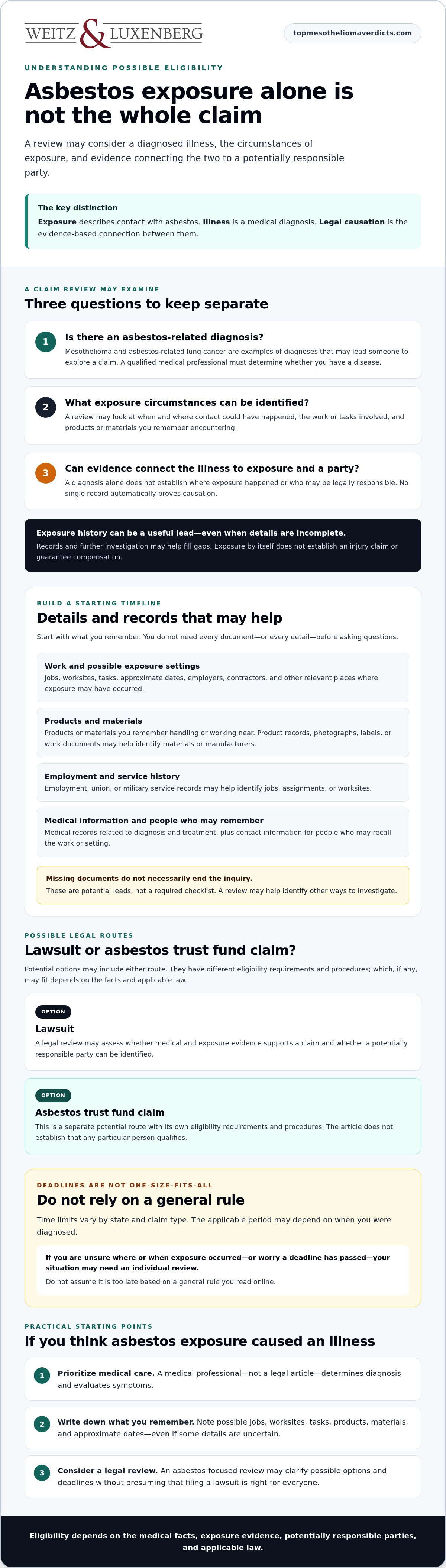
Exposure to asbestos may be an important part of your story, but exposure alone generally isn’t enough to support a lawsuit. If you’re asking, “can you sue for asbestos exposure,” the answer may depend on whether you have an asbestos-related diagnosis and whether evidence can connect your illness to specific products or companies.
It’s understandable to have questions, especially if you’re unsure where or when exposure occurred or worry that a legal deadline has passed. Rules vary by state, and the time limit may depend on when you were diagnosed. Don’t assume it’s too late based on a general rule you read online.
This article explains factors that may affect eligibility, including diagnosis, exposure history, evidence, and deadlines. It also covers records that may help an attorney review your situation and the differences between lawsuits and asbestos trust fund claims. An asbestos-focused legal review may clarify possible next steps, without assuming that filing a lawsuit is right for everyone.
Key Takeaways
- If you’re asking “can you sue for asbestos exposure,” exposure alone generally isn’t enough; a diagnosis and evidence connecting the illness to asbestos may matter.
- Work, product, and medical records may help an attorney investigate when and how exposure occurred, even if you don’t have every document.
- Potential legal options may include a lawsuit or an asbestos trust fund claim. Each has different eligibility requirements and procedures.
- Deadlines vary by state and claim type, so don’t assume it’s too late or that one general rule applies to your situation.
- Prioritize medical care, write down what you remember about exposure, and seek legal guidance to understand possible next steps without presuming a lawsuit is necessary.
Can you sue for asbestos exposure? Start with the basic eligibility factors
Possibly, if the facts meet the applicable medical and legal requirements. A history of asbestos exposure alone doesn’t establish an injury claim or guarantee compensation. A legal review may consider whether you have a diagnosed asbestos-related illness, what your exposure history shows, and whether evidence connects the exposure to the illness and to a potentially responsible party.
These are separate questions, and each matters. Exposure describes contact with asbestos; illness is a medical diagnosis; legal causation is the evidence-based connection between them. A diagnosis by itself doesn’t prove where exposure happened or who may be legally responsible. The history of asbestos litigation in the U.S. shows that claims can involve different companies, products, and legal routes. Individual eligibility still depends on the facts and applicable law.
Does asbestos exposure alone give you grounds to sue?
Exposure history can be an important lead, even if the contact happened decades ago or you’re unsure which product was involved. On its own, however, that history may not show that you suffered a compensable injury. If you’ve received an asbestos-related diagnosis, an attorney can assess whether the available medical and exposure evidence may support a claim. No general article can determine the outcome of an individual case.
To help build a useful starting timeline, write down:
- Jobs, worksites, and tasks where asbestos exposure may have occurred.
- Products or materials you remember handling or working near.
- Approximate dates and the names of employers, contractors, or product manufacturers, if known.
You don’t need to identify every detail before asking questions. Records and further investigation may help fill gaps. The relevance of any information depends on the claim and governing law.
What conditions may be involved in an asbestos claim?
Mesothelioma and asbestos-related lung cancer are examples of diagnoses that may lead someone to explore an asbestos claim. A qualified medical professional must determine whether you have a disease and provide an appropriate evaluation. This article can’t diagnose an illness. Don’t assume that respiratory symptoms or another lung condition resulted from asbestos without medical assessment.
If you’re asking can you sue for asbestos exposure, separate what you know from what still needs to be established: your diagnosis, possible exposure circumstances, and the connection between them. A careful review can help assess whether those facts may fit a legal claim, without treating exposure alone as proof of eligibility.
Linking Asbestos Exposure to Illness and Claims
A claim review looks beyond whether asbestos was present. It may examine whether evidence connects a diagnosed illness to relevant exposure and helps identify companies or other entities that may bear legal responsibility. That connection, often called causation, depends on the facts and applicable law. No single record automatically proves it.
Exposure history means the circumstances, possible sources, and timeline of asbestos contact that a case review may investigate. Even if your recollection is incomplete, a timeline can give an attorney useful starting points. For background on health risks of asbestos exposure, the National Cancer Institute discusses diseases associated with asbestos, including mesothelioma and lung cancer. A medical professional, not a legal article, determines an individual’s diagnosis.
Which records and details could help document exposure?
Start with what you remember. Note where you lived and worked, approximate dates, tasks you performed, and materials or products you may have encountered. Include possible exposure settings beyond work if relevant. A simple timeline is useful even when dates or product names are uncertain.
Possible sources to look for include:
- Employment, union, or military service records that may help identify jobs, assignments, or worksites.
- Product records, photographs, labels, or work documents that may help identify materials or manufacturers.
- Medical records related to diagnosis and treatment, along with contact information for people who may remember the work or setting.
These are potential leads, not a required checklist. Don’t delay seeking legal guidance just because some documents are missing. A review can help identify what information may be available and useful.
Why do medical records and exposure history both matter?
Medical records can document a diagnosis and related care. Exposure evidence can help establish where, when, and how asbestos contact may have occurred. Each provides a different part of the picture. The strength and relevance of particular records depend on the circumstances, and no document guarantees that a claim will succeed.
An attorney may investigate possible exposure sources by reviewing work and product histories, identifying companies connected to materials or worksites, and speaking with witnesses where appropriate. That process doesn’t establish that a particular company or product is responsible. Any conclusion must be based on case-specific evidence.
If you’re exploring can you sue for asbestos exposure, organizing what you know can make an initial review more productive. You can also read more about asbestos and lung cancer claims, or seek an asbestos-focused legal review to discuss what your records may show and what information could be gathered next.
Who might be responsible, and how do lawsuits differ from trust claims?
Identifying a potentially responsible party takes more than knowing asbestos was present. An investigation may examine the products involved, the worksite or other exposure setting, available records, and applicable law. Depending on those facts, potential defendants could include manufacturers, suppliers, premises owners, or other entities. No category is automatically responsible in every case.
Employers may also appear in an exposure history, but whether a claim against an employer is possible depends on the circumstances and applicable state law, including workers’ compensation rules. An attorney can help distinguish that question from claims involving other companies or legal options. The EPA provides an overview of federal asbestos laws and regulations, but regulatory requirements alone don’t determine who is liable in a particular civil claim.
Which parties could an asbestos investigation examine?
A review may trace a product from its manufacturer or supplier to the place it was used, or examine who owned or controlled a relevant premises. Work records, product details, and witness accounts can help clarify those connections. These are possible investigation paths, not conclusions. Evidence and governing law determine which parties, if any, may be named in a claim.
How does an asbestos lawsuit differ from a trust fund claim?
Some companies established asbestos bankruptcy trusts as part of bankruptcy proceedings. A lawsuit and a trust claim follow different processes, and each has its own criteria. Depending on the facts, more than one route may warrant review, but not everyone will qualify for every option. A lawyer can assess whether either process may fit and whether both should be considered.
| Consideration | Lawsuit | Trust fund claim |
|---|---|---|
| Who or what is involved | A claim may name parties alleged to be legally responsible, based on evidence and law. | A claim is submitted to a relevant asbestos trust, if its criteria may be met. |
| What shapes review | Medical evidence, exposure history, potential defendants, and applicable legal rules. | The trust’s own requirements and the information supporting the claim. |
| Procedure | Handled through the court process and related legal procedures. | Handled through the trust’s claims process. |
For more context, see the asbestos trust fund payout guide. It can explain how trust claims work, but it can’t predict whether you qualify or what a claim may yield. If you’re asking, can you sue for asbestos exposure, an asbestos-focused legal review can help assess potential parties and routes without assuming a lawsuit is the only option.
What deadlines and legal rules can affect an asbestos exposure lawsuit?
Asbestos claim deadlines aren’t one-size-fits-all. The time limit may depend on the state, the type of claim, and a person’s circumstances. A rule that applies to one person or jurisdiction may not apply to another, so don’t treat a general deadline found online as a decision about your case.
Only a review of the relevant jurisdiction and facts can clarify which deadlines may apply. That review may need to account for where a claim could be filed, the diagnosis and exposure history, and whether the matter involves an injury claim or a claim brought after someone’s death. Trust claim deadlines may follow separate procedures and should be checked separately.
When might a deadline begin for an asbestos-related claim?
Some jurisdictions apply a discovery rule, which may affect when a filing period begins. Depending on state law and the circumstances, diagnosis or discovery of an illness and its possible connection to asbestos may be relevant. The clock doesn’t always start on the same date, and diagnosis doesn’t automatically determine the deadline. Exposure history and claim type may also matter.
A statute of limitations generally sets a period for bringing a legal claim. A statute of repose is a distinct type of rule that may set an outside cutoff tied to a specified event, regardless of when an injury is discovered. Whether either rule applies, and how it operates, depends on the governing law. Don’t assume a deadline has expired because exposure happened long ago, or assume a discovery rule extends the time to file.
What should you do if you’re unsure about the deadline?
Gather what you can, but don’t wait to seek guidance while trying to assemble a perfect file. A diagnosis date, relevant medical records, and a basic timeline of jobs, residences, and potential exposure can help an attorney begin a case-specific review. Use approximate dates if exact ones aren’t available.
An early review may clarify which jurisdiction’s rules could matter and whether a lawsuit or another asbestos-related option deserves consideration. It can’t guarantee that a claim can be filed or establish eligibility. Those questions require a review of the facts and applicable law. If you’re asking, can you sue for asbestos exposure, checking the possible deadline is a practical step toward understanding your options.
DIAGNOSED? CALL 1-800-885-MESO TODAY FOR A CONFIDENTIAL & FREE CONSULTATION
What should you do next if you think asbestos exposure caused an illness?
Start with your health. Ask a qualified medical professional about symptoms or a possible diagnosis, and keep copies of records you receive. Next, write down what you remember about potential exposure, including jobs, worksites, products, and approximate dates. Gather readily available records, then consider an asbestos-focused legal review to understand whether any options may fit your circumstances.
A conversation with an attorney doesn’t mean you have to file a lawsuit. It can help organize questions, assess possible evidence and deadlines, and explain routes that may be worth considering. If a mesothelioma diagnosis affects your family, this mesothelioma litigation guide may offer additional context.
What information can you prepare before a legal consultation?
You don’t need a complete file to begin. If available, bring or note:
- Diagnosis information, including the date and the treating medical providers.
- A work and residence timeline, with job duties, locations, and possible exposure periods.
- Product or material names you remember, even if you’re uncertain about exact details.
- Available employment, union, military, product, or medical records.
- Names of people who may recall a worksite, task, or product, plus questions you want answered.
Missing paperwork doesn’t, by itself, determine whether a review is worthwhile. Tell the attorney what you have and what remains uncertain. Those gaps may help guide further investigation.
What can a case review clarify, and what can it not promise?
Counsel may assess potential defendants, the evidence linking illness and exposure, deadlines, and whether a lawsuit or asbestos trust fund claim may be relevant. The review depends on the available facts and applicable law. It can clarify possible next steps, but it can’t guarantee eligibility, representation, or a particular outcome.
Weitz & Luxenberg represents people with asbestos-related lung cancer and mesothelioma nationwide and handles asbestos litigation and trust fund claims. The firm offers free consultations and contingency-based representation, subject to the applicable agreement. If you’re wondering can you sue for asbestos exposure, an initial discussion may help explain what a legal review involves without assuming that filing suit is the right choice.
DIAGNOSED? CALL 1-800-885-MESO TODAY FOR A CONFIDENTIAL & FREE CONSULTATION
Take the Next Step With Clear Information
If you’re asking, “can you sue for asbestos exposure,” remember that exposure alone doesn’t settle the question. A diagnosis, evidence connecting an illness to exposure, potentially responsible parties, and deadlines under applicable law may all shape your options. A lawsuit isn’t the only possible route, and an individual review can help clarify what may fit your circumstances.
Weitz & Luxenberg represents people with asbestos-related lung cancer and mesothelioma nationwide, across all 50 states. The firm offers free consultations and contingency-based representation, subject to the applicable agreement. A consultation can help you understand what information may matter and which next steps to consider, without promising eligibility or a particular outcome.
DIAGNOSED? CALL 1-800-885-MESO TODAY FOR A CONFIDENTIAL & FREE CONSULTATION
You don’t need every answer before asking questions. An informed first step can help you understand what to do next.
Frequently Asked Questions
Can you sue for asbestos exposure without a diagnosis?
Generally, exposure alone isn’t enough to establish an injury claim; a diagnosed asbestos-related illness is often an important requirement. If you’ve been exposed but have no diagnosis, that doesn’t establish that you have a claim or guarantee one will become available. Speak with a qualified medical professional about health concerns, and consider legal guidance if you’re diagnosed. Whether you can sue for asbestos exposure depends on the facts and applicable law.
Can you sue a company if you do not know which asbestos product caused the exposure?
Not knowing a product’s name doesn’t automatically prevent an investigation, but a claim generally needs evidence connecting exposure to a potentially responsible company or product. Start with what you remember: the worksite, job duties, approximate dates, materials, and people who may have witnessed the work. Employment records, photographs, or product documents may offer leads. An attorney can assess whether the available evidence identifies a viable claim. Responsibility can’t be assumed without case-specific support.
How long after asbestos exposure can you file a lawsuit?
There’s no single nationwide deadline. Personal injury filing periods vary by state and circumstances; the research available for this article reports a range of one to six years, often measured from diagnosis under a discovery rule. That range isn’t a deadline for every case. Claim type, jurisdiction, and individual facts can affect the calculation. Seek prompt legal guidance rather than relying on a general online estimate or assuming the time to file has passed.
Can family members file an asbestos lawsuit for someone who has died?
Possibly. Depending on state law and the circumstances, eligible family members or an estate representative may be able to bring a wrongful death claim after an asbestos-related death. Who can file and what the claim may include vary. Wrongful death deadlines are separate from personal injury deadlines and are often measured from the date of death; the applicable period depends on the jurisdiction. A case-specific review can help clarify who may have authority to act.
Can you sue an employer for asbestos exposure?
It depends on the circumstances and state law. Workers’ compensation rules often limit an employee’s ability to sue an employer over a work-related injury, though exceptions may apply. An asbestos investigation may also examine manufacturers, suppliers, premises owners, or other entities connected to exposure. These possibilities aren’t automatic. A lawyer can assess the relevant facts and legal rules. This is different from preparing or filing a workers’ compensation claim.
Do you have to go to court to seek compensation for asbestos exposure?
Not necessarily. A lawsuit may resolve through a settlement rather than a trial, while an asbestos trust fund claim follows the trust’s own process and generally isn’t a court lawsuit. Whether either route is available depends on eligibility, evidence, and applicable rules. Filing a lawsuit doesn’t establish in advance whether a court appearance will be required. Ask an attorney what procedures may apply to your situation.
Disclaimer
Published by Weitz & Luxenberg, P.C. National Headquarters: 700 Broadway, New York, NY 10003. Call 800-885-MESO. Attorney Advertising. Prior results do not guarantee a future outcome. Certain contentions in blog posts need to be confirmed by a licensed attorney.


