

Could a second doctor’s assessment support your care while raising questions about an asbestos claim? If you’re weighing the mesothelioma second opinion legal implications, it’s understandable to worry that differing medical records could complicate a claim or that seeking another opinion might cost valuable time. Your health needs attention first. A new assessment doesn’t automatically erase earlier records or decide the outcome of a legal claim.
Medical care and legal claims are connected, but they’re separate processes. A second opinion may clarify a diagnosis or treatment options. Organized records and timely legal guidance can help you understand how medical information relates to a potential claim and what deadlines may apply. This article explains what to gather before an appointment, which questions to raise with your doctors and legal counsel, and how to keep decisions coordinated without putting off care.
Key Takeaways
- A second opinion is another clinician’s assessment of your diagnosis or treatment options, and seeking one is a medical decision.
- The mesothelioma second opinion legal implications depend on the context of your records. Differing assessments don’t automatically mean a claim is harmed.
- Before your appointment, organize available pathology and imaging reports, treatment summaries, and relevant correspondence. Keep any follow-up documents.
- Legal counsel can help assess how medical records may relate to a potential claim, what evidence questions arise, and which deadlines may apply, without directing your treatment.
Mesothelioma Second Opinion Legal Implications: What the Term Means
Seeking another medical opinion is a personal healthcare decision. If you’re also concerned about how it could affect an asbestos claim, that’s understandable. The phrase mesothelioma second opinion legal implications describes questions where medical records and legal claims intersect. It doesn’t mean a second doctor’s view automatically changes your rights. The effect in an individual case depends on its facts, the available records, and applicable state law.
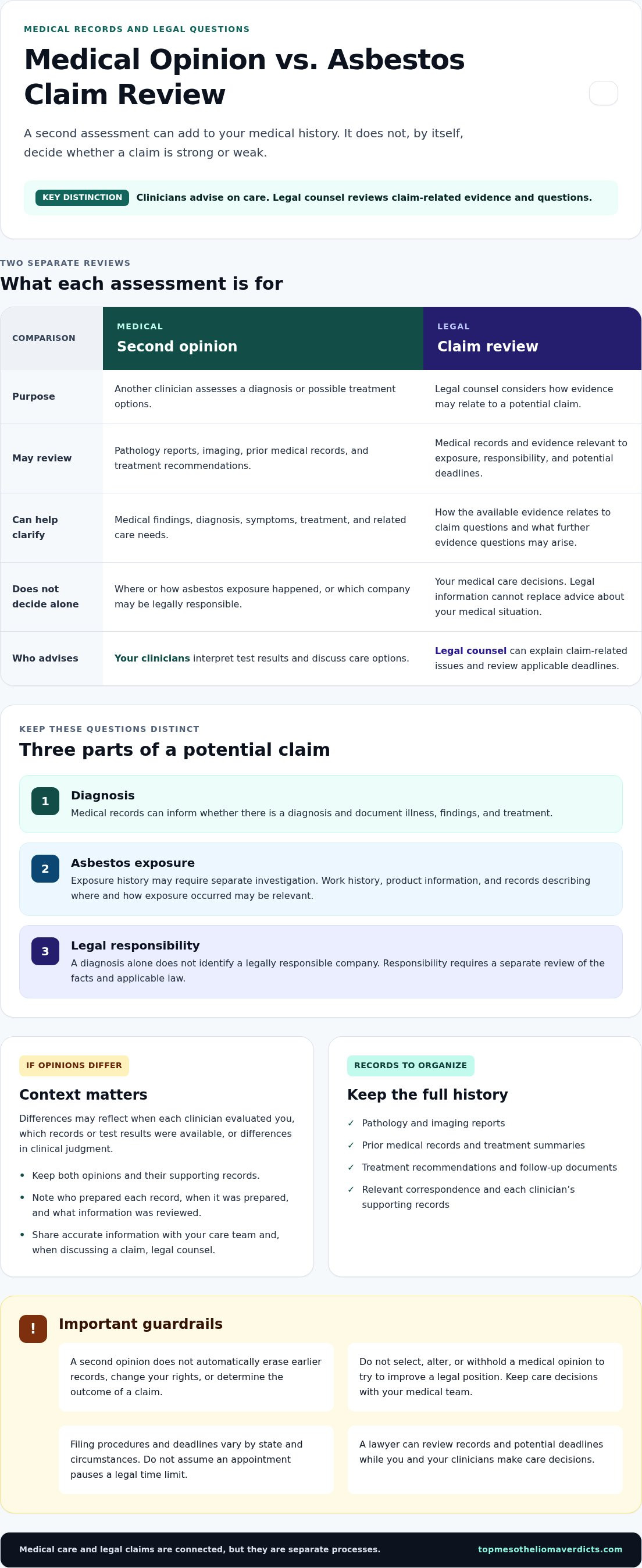
A medical second opinion is another clinician’s assessment of a diagnosis or possible treatment options. A lawyer’s review is different: it considers how evidence may relate to a potential claim, including questions about exposure, responsibility, and deadlines. Clinicians advise on care; legal counsel can explain claim-related issues. Legal information cannot replace advice about your specific medical situation or case.
What does a mesothelioma second opinion involve?
With your authorization, a clinician may review pathology reports, imaging, prior medical records, and treatment recommendations. They may agree with the existing assessment, offer additional detail, or recommend further evaluation. The purpose is to help you understand your medical situation and options, not to promise a different diagnosis or treatment plan.
Mesothelioma is a cancer associated with asbestos exposure, but diagnosis and care are individual. For general background on the disease, see Mesothelioma Wikipedia. Your own clinicians are the appropriate people to interpret your test results and discuss what they mean for your care.
Why might a medical opinion matter to an asbestos claim?
Medical documentation may help establish a diagnosis and describe its effects, including symptoms, treatment, and related care needs. Records from multiple clinicians can contribute to your medical history. If assessments differ, consider when each was made, what information the clinician reviewed, and whether further evaluation was recommended. A difference in the records is not, by itself, a conclusion about a claim.
Medical evidence is only one part of an asbestos claim. A diagnosis alone does not establish where or how exposure occurred, which companies may be legally responsible, or whether a particular claim can proceed. Those questions require a separate review of the facts and applicable law.
A clinician offers a medical opinion; a legal claim requires a broader assessment of evidence, exposure, and responsibility. A second opinion does not automatically determine or erase legal rights. Continue discussing care options with your medical team, and address legal questions separately without putting treatment decisions on hold.
How a Second Medical Opinion Can Intersect With a Mesothelioma Claim
A second opinion can add another entry to your medical history, but its presence doesn’t, by itself, determine whether an asbestos claim is strong or weak. If you’re considering the mesothelioma second opinion legal implications, focus on how the assessments fit together and what each one says. A clinician may document a diagnosis, findings, and care recommendations. Those records may be relevant to a claim, but they don’t answer every legal question.
Keep three issues distinct: whether there is a mesothelioma diagnosis, what asbestos exposure may have occurred, and whether a company may be legally responsible. Medical records can inform the first issue and document the effects of illness and treatment. Exposure history and legal responsibility generally require separate investigation and supporting evidence. A medical assessment alone does not prove where exposure happened or who may be liable.
What if two doctors reach different conclusions?
Different assessments can reflect when each clinician evaluated you, which records or test results were available, or differences in clinical judgment. One specialist might confirm an earlier conclusion while adding detail; another might recommend more evaluation. Preserve both opinions and their supporting records, including any explanation of what information each clinician considered. Don’t select, alter, or withhold a medical opinion to try to improve a legal position. Give your care team accurate information so they can advise you appropriately.
How can medical records and legal evidence differ?
A claim may involve evidence beyond medical documentation. Work history, product information, or records describing where and how a person encountered asbestos may help inform an exposure investigation. Which evidence matters depends on the individual facts and the claim being considered. Diagnosis evidence can show a medical condition; it does not, by itself, establish asbestos exposure or identify a legally responsible company.
If records appear inconsistent, context matters more than assumptions. A later report might incorporate additional testing, or a clinician might explain why an assessment changed. Note which provider prepared each document and when. Share relevant information accurately with your medical team and, if you’re discussing a claim, your legal counsel. This helps address questions using the full history rather than an isolated line in a report.
Procedures and filing deadlines vary by state and by the circumstances of a claim. Don’t assume one universal deadline applies or that arranging a medical opinion pauses a legal time limit. A lawyer can review the facts, records, and potential deadlines while you and your clinicians make care decisions. For an overview of the broader process, explore this mesothelioma litigation guide.
Could a Second Opinion Hurt a Mesothelioma Case? Separating Risks From Myths
A second opinion alone doesn’t establish that a mesothelioma claim has been harmed. It’s a step you may take to better understand your diagnosis or care options. The practical concern is whether the medical record is complete and whether changes or differences in assessments can be understood in context. Preserve the records and make sure relevant clinicians and, when appropriate, legal counsel have an accurate picture.
When considering mesothelioma second opinion legal implications, don’t assume every difference between reports is a contradiction. An assessment may change as additional test results become available, or a later clinician may explain the findings differently. Missing records, inaccurate dates, or an unexplained change can prompt questions, but questions are not the same as a conclusion about a claim. Don’t alter or withhold information to shape how it appears.
Does a different diagnosis automatically invalidate a claim?
No single difference automatically answers that question. Consider records in full and in chronological context: what each clinician reviewed, when the assessment was made, and whether further testing or evaluation followed. A revised assessment may reflect new information or a change in clinical judgment. That is different from deliberately concealing or misrepresenting information. Keep copies of reports and related records, and ask your clinicians to explain medical changes in terms you understand.
If you’re worried about how a particular difference relates to a potential claim, qualified legal counsel can review the case-specific circumstances and explain what questions may need attention. That review shouldn’t discourage you from seeking medical input or substitute for your physician’s advice. Your care decisions belong in discussion with your medical team.
Can seeking another opinion delay legal action?
Gathering records and arranging an appointment can take time, though the timing varies. You don’t have to choose between seeking medical guidance and understanding your legal options. As you pursue care, preserve appointment notes, reports, and follow-up recommendations. Separately, ask counsel to assess any claim-related timing concerns.
Filing deadlines and legal procedures vary by state and by the circumstances of a claim. A medical appointment doesn’t necessarily pause a deadline, and there’s no universal timeframe that applies to everyone. If you’re concerned about timing, raise the question promptly with a lawyer familiar with asbestos claims. Make medical decisions with your clinicians and address legal questions without putting off care.
A Practical Checklist Before and After a Mesothelioma Second Opinion
Preparing for another medical assessment can make the appointment more focused and help you keep an accurate record of your care. It can also help address questions about mesothelioma second opinion legal implications. Use this checklist as a practical guide, not a reason to postpone treatment. Your medical team can advise you about care, while legal counsel can address claim-related records and timing.
- Gather available records. Collect pathology reports, imaging reports, treatment summaries, relevant clinical notes, and correspondence about your diagnosis or care. Include documents from different providers when available, and keep them in their original form. If something is missing, note what it is rather than trying to recreate or alter a record.
- Prepare questions and a care timeline. Note when key appointments, tests, and treatment discussions occurred. Ask the clinician about diagnostic certainty, whether additional evaluation may be appropriate, how recommendations compare with prior guidance, and how to request records afterward. Keep personal recollections about possible asbestos exposure in a separate timeline from clinical notes, and record both accurately.
- Attend the appointment and provide relevant information. Share the medical history and records needed for the clinician’s assessment. Use your prepared questions to clarify findings and options. If you don’t know an answer or can’t locate a document, say so. Accurate context is more useful than guessing.
- Preserve follow-up documents. Keep copies of the second opinion, test results, instructions, and later communications. Record dates and retain earlier versions rather than replacing them. Share relevant updates with your treating clinicians so your care team has an accurate history.
What records and questions should you organize?
Prioritize diagnostic reports, imaging reports, treatment notes or summaries, and correspondence relevant to your care. A brief timeline can help the clinician understand how the evaluation has progressed. Keep exposure recollections distinct from clinical records. Work locations, tasks, products, or other details may be relevant to a separate exposure history, but don’t present personal recollection as a medical finding. Bring questions that matter to your decisions, including what the assessment means for your care.
How should you handle records and communications afterward?
Request copies through the provider’s established records process and save dated versions securely. Share accurate updates with clinicians involved in your care. For claim questions, counsel can discuss how records may relate to a potential asbestos claim, how to handle relevant documents, and whether state-specific timing issues need attention. Privacy rules and authorization requirements depend on the circumstances and applicable law. Don’t seek or share another person’s protected health information without proper authorization.
Medical appointments and legal timelines can proceed in parallel. If you have questions about how your records may relate to an asbestos claim, a legal consultation can help you understand the issues without replacing your doctors’ guidance or delaying care. Discuss your asbestos claim with Weitz & Luxenberg in a free consultation.
How Legal Counsel Can Help You Consider Second Opinion Implications
A lawyer can help you understand how medical records and a second opinion may relate to a potential asbestos claim. Counsel can review available documentation, discuss possible claim routes, identify evidence questions, and assess deadlines that may apply to your circumstances. This legal review is separate from medical care. Your physician and other clinicians should guide diagnosis and treatment decisions; a lawyer shouldn’t replace their advice or direct your care.
For people facing mesothelioma second opinion legal implications, a consultation offers a place to raise claim-related concerns without putting medical decisions on hold. Weitz & Luxenberg represents people with mesothelioma and asbestos-related lung cancer nationwide, including through litigation and asbestos trust fund claims. Whether a particular route may apply depends on individual facts and eligibility. The firm offers free consultations and works on a contingency basis; neither fact guarantees that a claim will qualify or result in compensation.
What can a legal consultation clarify?
Counsel can discuss how existing and later medical records may fit into the history of a potential claim and whether other evidence questions need attention. A review may also consider potential litigation or trust fund claim routes, along with the deadlines and procedures that could apply. These options aren’t interchangeable, and their relevance depends on the specific circumstances. For broader context about the claim process, the mesothelioma litigation guide offers an overview.
What should you ask before deciding on next steps?
Bring questions that will help you understand your options. Ask which state-specific deadlines may affect your situation, what records are relevant, and how to provide them accurately, including any differing medical assessments. You can also ask how legal discussions can proceed alongside ongoing appointments and treatment. You don’t need to resolve every legal question before speaking with your care team.
Keep the roles clear: clinicians make medical recommendations, while counsel can explain legal considerations and help you understand how records may relate to a claim. Legal guidance is case-specific and isn’t a substitute for advice from your medical providers. If you’re ready to discuss how your diagnosis and records may relate to an asbestos claim, a confidential consultation can help you explore the questions without promising a particular outcome.
DIAGNOSED? CALL 1-800-885-MESO TODAY FOR A CONFIDENTIAL & FREE CONSULTATION
Move Forward With a Clearer Plan
You don’t have to resolve every medical and legal question at once. Choose the next step that supports your care, and address claim concerns as they arise. If the mesothelioma second opinion legal implications still feel uncertain, write down the specific questions you want answered, such as how a new report may fit into your records or whether a deadline needs attention.
Medical decisions belong with you and your care team. Legal questions can be discussed separately, so seeking guidance about a potential asbestos claim doesn’t mean putting treatment conversations on hold. A confidential consultation can help you understand what information may matter to your circumstances and what questions to consider next. No general article can determine the outcome or deadlines for an individual case.
DIAGNOSED? CALL 1-800-885-MESO TODAY FOR A CONFIDENTIAL & FREE CONSULTATION
Take things one decision at a time. With the right questions and support, you can move ahead with greater confidence.
Frequently Asked Questions
Is getting a second opinion bad for a mesothelioma lawsuit?
No. A second opinion is a medical choice and doesn’t, by itself, determine whether a claim is valid or harmed. The mesothelioma second opinion legal implications depend on the individual facts and records. If a new report uses different wording, keep it with the earlier report rather than treating one as a replacement. A lawyer can explain possible claim-specific questions; medical concerns belong with qualified clinicians.
Can a second doctor change a mesothelioma diagnosis?
Yes. A second clinician may confirm the initial assessment, add detail, recommend further evaluation, or reach a different conclusion after reviewing the available information. If a report changes, ask the medical team what findings or additional information informed the assessment. You can also ask how the clinician will document the conclusion and any recommended follow-up. Focus your questions on understanding the medical reasoning and care options.
What happens if two doctors disagree about mesothelioma?
There isn’t one automatic legal result when clinicians disagree. Your medical team can explain the basis for each assessment, while counsel can discuss how the records may relate to a potential claim. Note each report’s date and provider, and keep related test results together. Don’t edit, discard, or hide a record to make the opinions appear consistent. The significance depends on the case facts and applicable law.
Can I speak with a mesothelioma lawyer before getting a second opinion?
Yes. You can ask a lawyer about claim-related questions while also consulting your medical team about diagnosis and treatment. A legal discussion may help identify documents or timing issues to consider, but it can’t tell you which medical opinion to follow. For example, ask whether a particular report is relevant to a potential claim, then discuss its clinical meaning with your doctor. State procedures and deadlines vary.
Do I have to share every medical record with a mesothelioma lawyer?
Which records are relevant and how they may be shared depends on the circumstances, privacy rules, and authorization requirements. If counsel requests a document, ask what question it may help address and how to provide it appropriately. Keep an original copy for your own files, and don’t change a report or omit information to create a particular impression. A lawyer can explain case-specific requests without replacing your clinicians’ guidance.
Can getting a second opinion affect the deadline to file a mesothelioma claim?
Don’t assume a second-opinion appointment pauses or extends a filing deadline. Deadlines and procedures vary by state and by the circumstances of a claim, so a general answer can’t calculate your individual date. If you’re arranging another assessment, you can raise the timing question with a lawyer at the same time. Continue making care decisions with your medical team rather than delaying treatment solely to address a legal claim.
Disclaimer
Published by Weitz & Luxenberg, P.C. National Headquarters: 700 Broadway, New York, NY 10003. Call 800-885-MESO. Attorney Advertising. Prior results do not guarantee a future outcome. Certain contentions in blog posts need to be confirmed by a licensed attorney.


