

Could a peritoneal mesothelioma lawsuit still be an option if your asbestos exposure happened decades ago? The time between exposure and diagnosis can be long, but that alone doesn’t determine whether you can pursue a claim. Filing deadlines vary by state and claim type, and may begin at diagnosis, so understanding the timing matters.
It’s understandable to wonder how an illness affecting the lining of the abdomen could connect to past work, products, or another exposure setting. Building a claim often starts with reconstructing that history, even when records are incomplete and treatment is the priority.
This guide explains what facts and evidence may matter, how a lawsuit differs from an asbestos trust fund claim, and how the two routes may relate. You’ll also learn how a free consultation and contingency-based representation can help reduce initial financial barriers. The right next step depends on your circumstances, and no claim or outcome is guaranteed. The goal is to help you understand your options and consider them without added pressure.
Key Takeaways
- A diagnosis may prompt a legal review, but a claim also depends on evidence of asbestos exposure and potentially responsible companies.
- Start an exposure timeline with available medical and work records, product names, and details from people who may remember the circumstances.
- A peritoneal mesothelioma lawsuit and an asbestos trust fund claim follow different processes. Which routes may apply depends on the facts and requirements.
- Filing deadlines vary by state, claim type, and individual circumstances, so a prompt review can help clarify timing and next steps.
- Weitz & Luxenberg offers a free consultation and contingency-based representation to help you explore legal options while treatment remains the priority.
Peritoneal Mesothelioma Lawsuits: What a Diagnosis May Mean for Your Legal Options
A peritoneal mesothelioma diagnosis can bring urgent questions, including whether asbestos exposure from years ago may have legal significance. A peritoneal mesothelioma lawsuit is a legal claim that may seek to hold companies accountable for asbestos exposure. A diagnosis alone, however, doesn’t establish that a particular company is liable or that a claim can proceed.
A legal review looks beyond the diagnosis to examine the person’s exposure history and the entities that may have supplied, made, or used asbestos-containing products. The history may involve several workplaces or products. Identifying relevant connections can take careful investigation, and the assessment should be based on available facts rather than assumptions about the outcome.
Depending on the circumstances, possible routes may include personal-injury litigation or claims against asbestos bankruptcy trust funds. These processes have different requirements, and options available to one person may not apply to another. Eligibility and deadlines depend on individual facts and applicable state law, so this overview is legal information, not advice about a specific case. It also isn’t medical advice; questions about diagnosis or treatment belong with a qualified medical professional.
How a peritoneal diagnosis connects to an asbestos claim
The peritoneum is the lining of the abdominal cavity. Medical background on Peritoneal Mesothelioma can help explain the condition. A legal assessment asks a separate question: what evidence, if any, connects the diagnosis to asbestos exposure and potentially responsible entities?
That review may consider medical records alongside details about jobs, worksites, products, and dates. For example, someone may remember maintenance or construction work but not the manufacturer of materials used there. An incomplete memory doesn’t settle whether a claim is possible. Records and other sources may help clarify the history.
Who may want to explore a legal review?
People diagnosed with peritoneal mesothelioma may want to understand whether their past exposure could support a legal claim. Family members may also help a loved one organize records and explore potential options. If the diagnosed person has died, surviving family members can ask about possible claims, although the rules may differ.
Not knowing exactly where exposure occurred doesn’t, by itself, determine eligibility. A review can organize what is known, identify unanswered questions, and assess which routes may be relevant. It can’t guarantee that a claim qualifies or that compensation will result. Even a basic timeline of jobs, products, and possible witnesses can give the investigation a useful starting point.
Building the Exposure History Behind a Peritoneal Mesothelioma Lawsuit
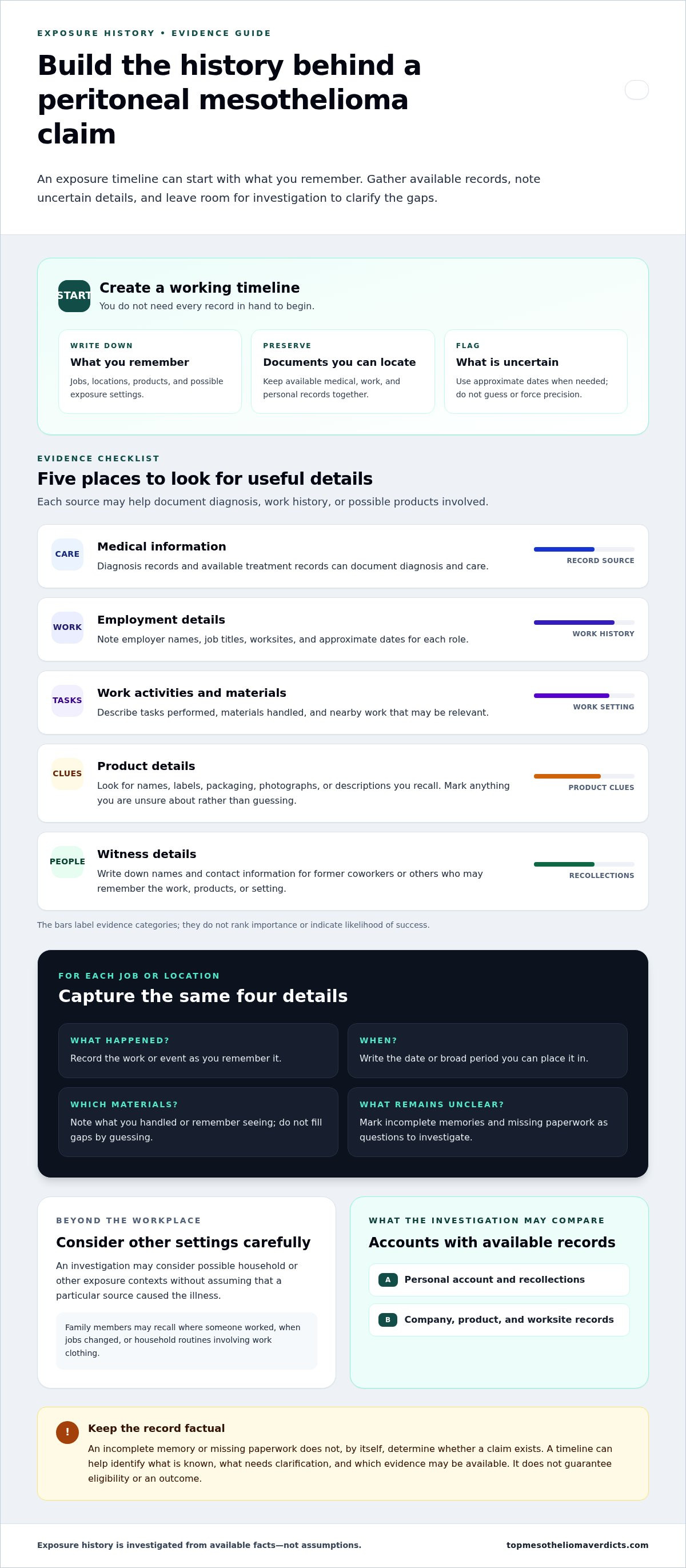
Reconstructing asbestos exposure can feel difficult, especially when the jobs or products involved are part of the distant past. You don’t need every record in hand to begin. Write down what you remember, preserve documents you can locate, and mark details that are uncertain. This gives an investigation a clearer starting point without treating a recollection as proof on its own.
Exposure evidence is the records and testimony used to investigate where and when contact with asbestos may have occurred. In a peritoneal mesothelioma lawsuit, the aim is to build a careful timeline and assess whether available evidence connects exposure to potentially responsible companies. Approximate dates and unanswered questions can still be useful when clearly identified.
Records and recollections that can help document exposure
Start with materials that may help confirm the diagnosis, work history, or products involved. Medical records can document diagnosis and care. The National Cancer Institute’s Mesothelioma Treatment Options page provides medical background, not legal advice. Work documents, old employment information, and personal notes may help fill in dates and job details.
- Medical information: Diagnosis records and available treatment records.
- Employment details: Employer names, job titles, worksites, and approximate dates for each role.
- Work activities: Tasks performed, materials handled, and nearby work that may be relevant to the history.
- Product clues: Names, labels, packaging, photographs, or descriptions you recall. Don’t guess if you’re unsure.
- Witness details: Names and contact information for former coworkers or others who may remember the work, products, or setting.
For each job or location, note what happened, when it happened, and what you remember about the materials used. If you can place an event only within a broad period, record that rather than forcing a precise date. Missing paperwork doesn’t, by itself, determine whether a claim exists. Other records or testimony may help clarify parts of the history.
Investigating workplace, household, and other exposure contexts
A legal investigation may compare a person’s account with available company, product, and worksite records. It may also consider possible household or other settings without assuming that a particular source caused the illness. For example, family members may recall where someone worked, when they changed jobs, or household routines involving work clothing. These details can point to questions for further review, but they don’t establish exposure or liability on their own.
Keep notes separate from confirmed documents, and record who provided each recollection. That distinction helps show what is known and what still needs investigation. Families seeking context for the broader process can review this mesothelioma litigation overview while organizing relevant information.
Lawsuit or Asbestos Trust Fund Claim: Comparing Possible Routes
Once you’ve organized possible exposure details, the next question is which legal routes those facts may support. A peritoneal mesothelioma lawsuit and an asbestos trust fund claim have different bases and procedures. Neither is automatically available, and they aren’t necessarily mutually exclusive. An attorney must assess the exposure evidence, potentially responsible entities, and applicable requirements to determine which options may fit.
How a lawsuit differs from an asbestos trust fund claim
A lawsuit is brought through the court system against companies that may be legally responsible for asbestos exposure. A trust fund claim is submitted to an established asbestos bankruptcy trust if the claimant and exposure history meet that trust’s requirements. The Health Effects of Asbestos Exposure page from the Agency for Toxic Substances and Disease Registry offers public-health context. It doesn’t identify a legally responsible company or determine whether a claim meets legal standards.
| Consideration | Lawsuit | Trust fund claim |
|---|---|---|
| Basis | A claim against potentially responsible parties through the court system. | A submission to an asbestos bankruptcy trust, subject to its criteria. |
| Process | May involve court procedures, evidence gathering, and case-specific resolution. | Requires submitting information and supporting materials under the trust’s process. |
| Key considerations | Potential defendants, evidence, court rules, and applicable deadlines may matter. | The trust’s requirements and available exposure documentation may matter. |
For a closer look at how trust submissions are evaluated, this asbestos trust fund payout guide explains the trust process. It provides background, but it can’t determine which trusts, if any, may apply to an individual case.
Questions that shape which routes may be available
A review may consider which products or worksites appear in the exposure history, what evidence connects them to particular companies, and whether those entities are subject to a lawsuit or established trust. If someone encountered asbestos in more than one job or setting, each part of the history may need separate analysis. Court procedures and trust requirements can also differ, so the same evidence may be relevant in different ways.
Useful questions include how each possible route relates to the known exposure history, what additional records could help, and which deadlines need prompt attention. Outcomes and timing vary. No route guarantees a recovery, and this overview isn’t a prediction about a particular claim. An attorney can assess legal options without promising a result. Weitz & Luxenberg handles mesothelioma litigation and asbestos trust fund claims. A mesothelioma claim review can help clarify which questions to address next.
Deadlines, Evidence Gaps, and Other Concerns About Filing
Questions about timing and missing records can make it hard to know where to begin. Neither should be resolved by guesswork. A prompt, case-specific review can help clarify which deadlines may apply and what information could help assess a potential claim. An online article can offer general legal information, but it can’t determine the rules or outcome for your circumstances.
Why there is no single deadline for every claim
Filing deadlines for a peritoneal mesothelioma lawsuit can depend on state law, the type of claim, and details of the individual case. A personal-injury claim and a claim brought by surviving family members may be governed by different rules. The relevant facts and applicable law matter, so don’t assume a deadline described for one state or claim applies to another.
Timing can also depend on the legal route being considered, since court cases and asbestos trust fund claims may follow different procedures. Don’t rely on a general deadline found online or assume that a long interval since possible exposure answers the question. A legal review can assess timing against the specific facts and requirements. Acting promptly gives you an opportunity to understand those requirements. It doesn’t mean a claim is already late or that filing is guaranteed to be available.
What if exposure details or records are incomplete?
Old employment files, product labels, and worksite documents may be difficult to locate. Their absence doesn’t, by itself, determine whether a claim can be investigated. Depending on the case, interviews, employment records, and company information may help examine a possible exposure history. These sources may clarify leads, but they don’t automatically prove exposure or establish that a company is liable.
Make a short record of what you remember, even if dates are approximate. Separate confirmed details from questions or recollections you’re unsure about. You can organize your next steps this way:
- Preserve records: Keep available medical, employment, and other potentially relevant documents together.
- Note the history: Write down remembered dates, job duties, worksites, products, and possible witnesses.
- List questions: Mark gaps, uncertain product names, and time periods that need clarification.
- Seek case-specific guidance: Ask how applicable deadlines and available evidence may affect your options.
Weitz & Luxenberg offers a free consultation and works on a contingency basis. Discuss the terms of representation, including any costs or expenses, for your situation. A consultation can help you understand what information may matter without promising eligibility or a particular result. For individualized guidance about timing and evidence, Request a confidential, free consultation or call 1-800-885-MESO.
How Weitz & Luxenberg Can Help Review a Peritoneal Mesothelioma Claim
Trying to understand legal options while managing a diagnosis can feel like a lot to carry. Weitz & Luxenberg represents people with mesothelioma nationwide and handles litigation and asbestos trust fund claims. A legal review can help organize available information and explain possible routes without assuming that every diagnosis supports a claim or promising a particular result.
What to expect from an initial legal conversation
An initial conversation can focus on your diagnosis, what you know about past asbestos exposure, and any records or recollections you’ve gathered. You can raise questions about workplaces, products, dates, and possible witnesses, even if some details are uncertain. The purpose is to understand the individual facts and discuss whether litigation, trust fund claims, or other relevant options warrant further review.
You don’t need to arrive with a complete file. Sharing what you have and identifying what remains unclear can help frame the next questions. A case review considers applicable law alongside available evidence. It can’t guarantee eligibility, compensation, a decision by a particular date, or a specific outcome. Legal information is general; advice about a potential claim must account for the facts and law that apply to your circumstances.
Experience and fee structure to explain clearly
Weitz & Luxenberg offers free consultations and works on a contingency basis. That arrangement can reduce the initial financial barrier to discussing a claim, but it shouldn’t be understood as a promise that there will never be costs or expenses. Before representation, discuss the specific terms, including how fees and case-related expenses are handled.
Weitz & Luxenberg reports securing more than $13 billion in verdicts and settlements over more than 40 years and has a team of more than 500 professionals. These firm-wide figures provide context about the firm’s history and scale; they don’t predict or guarantee the result of an individual peritoneal mesothelioma lawsuit. Each matter turns on its own evidence, legal requirements, and circumstances.
If you’re considering a legal review, bring questions about exposure history, records, possible claims, and the terms of representation. The conversation can help clarify what may need further investigation without requiring you to have every answer in advance.
DIAGNOSED? CALL 1-800-885-MESO TODAY FOR A CONFIDENTIAL & FREE CONSULTATION
Take the Next Step on Your Terms
You don’t have to resolve every question at once. If you’re considering a peritoneal mesothelioma lawsuit, start by identifying what would help you feel more informed: whether your history merits further review, what questions remain, or how a legal discussion may fit alongside treatment and family responsibilities. You can focus the conversation on those priorities.
It may help to involve a family member or trusted person if that would make the discussion easier. Bring the questions that matter most to you, and ask for clear explanations of possible next steps and any terms of representation. A conversation can provide information to consider without requiring you to decide immediately or guaranteeing a particular outcome.
Weitz & Luxenberg represents people in asbestos and mesothelioma matters nationwide. If you’re ready to discuss your circumstances, request a free consultation and learn about the firm’s contingency-based representation.
Request a confidential, free consultation or call 1-800-885-MESO
Take things one question at a time. You deserve clear information as you consider what comes next.
Frequently Asked Questions
Can I file a peritoneal mesothelioma lawsuit if I do not know where I was exposed?
Possibly, but not knowing the source doesn’t establish whether you qualify or prevent an initial review. Exposure may have involved more than one workplace, product, or setting, and details can emerge gradually. For example, a former coworker may remember a product name you don’t, or an old job record may help identify a worksite. An attorney can assess whether available leads support further investigation.
How long do I have to file a peritoneal mesothelioma lawsuit?
There’s no single filing deadline that applies to everyone. State law, claim type, and individual circumstances can affect the time limit, and a personal-injury claim may follow a different rule from a claim brought after someone’s death. Don’t use another person’s deadline to judge your situation. Prompt, case-specific legal guidance can help clarify which rules may apply without assuming your claim is late.
Can my family pursue a claim if a loved one with peritoneal mesothelioma has died?
In some circumstances, surviving family members may be able to pursue a wrongful-death claim, but who may bring it and the applicable deadlines depend on state law and the facts. Keep documents that may help explain the diagnosis, work history, and family relationship, if available. A legal review can clarify who may have authority to act and which options may be relevant; it can’t guarantee a claim or result.
Does filing a peritoneal mesothelioma lawsuit mean the case will go to trial?
No. Filing a lawsuit begins a legal process, but it doesn’t mean a trial is certain. A case may resolve through settlement, proceed through court steps, or reach trial, depending on its evidence, the parties’ positions, and other circumstances. No one can promise which path an individual claim will take. Ask what stages may apply and how decisions about settlement or trial are made in your case.
Can someone pursue both a mesothelioma lawsuit and an asbestos trust fund claim?
Potentially, yes. A lawsuit involving a company and a trust claim involving a bankrupt company may be separate routes, but whether both are available depends on the exposure history, evidence, and each trust’s requirements. Claims may also involve procedural rules about disclosures or coordination. An attorney can review the specific companies and products identified in your history and explain how pursuing one route may affect the handling of another.
How much compensation can a peritoneal mesothelioma lawsuit provide?
There’s no reliable amount that can be predicted from a diagnosis alone. Any recovery depends on case-specific factors, including the evidence, responsible parties, applicable law, and how a claim is resolved. Past verdicts or settlements don’t determine what another person may receive. Be cautious of estimates that promise a particular figure before the facts are reviewed. A lawyer can explain what factors may matter without guaranteeing compensation.
Do I have to pay a mesothelioma lawyer upfront?
Weitz & Luxenberg offers free consultations and represents clients on a contingency basis, so you don’t pay an upfront attorney fee for the consultation. The specific representation agreement explains how fees are handled if there’s a recovery. Ask about case-related expenses and how they’re treated, since contingency representation shouldn’t be taken to mean that no costs or expenses could ever apply under any circumstances.
Disclaimer
Published by Weitz & Luxenberg, P.C. National Headquarters: 700 Broadway, New York, NY 10003. Call 800-885-MESO. Attorney Advertising. Prior results do not guarantee a future outcome. Certain contentions in blog posts need to be confirmed by a licensed attorney.


